Thứ Sáu, 26 tháng 8, 2016

Golden Gate to Faith - Taleju Temple of Bhaktapur, Nepal

The reflection of the golden gate of the Taleju Temple situated in the Bhaktapur Square, on the 'Durbar' was as inviting as its marvelous frontal architecture.  The golden hue matched the scintillating rays of the winter skies. The Taleju Temple is devoted to worship of goddess and many construe the word to be a connotation of the goddess 'Tulja Bhavani', revered deeply in the Indian subcontinent. The Sanctum Sanctorum of the temple is prohibited for the visitors and is believed to be mystically open to select religious faiths and only on the select days of a year. 


Taleju Temple, Bhaktapur
The Golden Gate of Taleju Temple, Bhaktapur


The inner architecture of the temple, comprising intricately designed wooden windows and army of golden hued bricks appear to add to the harmony. There were visible impacts of the destruction caused by the earthquake with scores of idols lying for want of resurrection, however they were definitely not as grave as those of the square outside.

Architecture at Taleju Temple, Bhaktapur
Idols wanting for restoration beneath the intricate architectural design

The architecture appeared to be a conflux of several forms of with balconies having reflection of jharokhas and major usage of bricks, also a common feature across other temple of the Kathmandu valley.

Architecture at Taleju Temple, Bhaktapur
Wooden Architecture - At its Best !


Architecture at Taleju Temple, Bhaktapur
Priceless Idols demarcated temporarily


Architecture at Taleju Temple, Bhaktapur
Amazing Architecture - Continues

Architecture at Taleju Temple, Bhaktapur
Splendid Architecture

The internal sanctum leads to a stepped pond that stands opposite to the main temple and the water is considered to be quite pious by the worshipers. There are multiple statues of snake gods, the most prominent being that of the bronze statue, that stands guard outside the pond, facing the premises of the main temple. There is a shiva linga present as well on an elevated platform.

Stepped Pond - Inside the Taleju Temple

Bronze Snake Statue, Taleju Temple, Bhaktapur
Bronze Statue that adores the Pond

Bronze Snake Statue, Taleju Temple, Bhaktapur

Bronze Snake Statue, Taleju Temple, Bhaktapur

The photography is prohibited inside the main temple and its entry is restricted to only practitioners of Hindu and Buddhist religion. The temple inside is adorned with exquisite carvings and a square for offering 'pashu bali' to divine goddess. Inside the security guarded gates of the main temple, there are several other small temples adorned with excellent architecture. The setting is sure to erupt the images of the rituals that would be offered to the divine that is pivoted across a massive bell that is firmly placed in the courtyard of the temple. 

Architecture in the Taleju Temple, Bhaktapur
Architectural Delights - Taleju Temple, Bhaktapur

Overwhelming Curiosity and Innate Content

Leaving the temple for next destination of Nagarkot, there was as much overwhelming curiosity for what we didn't see, as much the innate content for what we did !

POV: The Pehlwani | The Kushti Wrestlers

Photo © Tewfic El-Sawy-All Rights Reserved
One of the scheduled photo shoots during my recent The Sacred Cities: Varanasi & Vrindavan Photo Expedition-Workshop was at an akhara, which is a Sanskrit word meaning training area for traditional Indian wrestlers, known as pehlwanis. This traditional Indian wrestling is known as kushti, and was developed in the Mughal era by combining native wrestling and Persian techniques.

These two pehlwanis were the most photogenic of the group that was training when we visited early in the morning. The wrestler in the top photographer is yielding a nada,  a heavy round stone attached to the end of a meter-long bamboo stick. This training implement is associated with Hanuman.

The bottom wrestler is using heavy Indian clubs, exercise clubs introduced by the Mughals and originally used in the Near East, especially in Persia and Egypt.

I wasn't thrilled about the quality of light in the akhara, as the area combined extreme harsh sunlight and deep shadows....and most of the background was of unfinished concrete walls. A difficult photo shoot. However, the wrestlers largely compensated for this, especially when they had daubed themselves with soft clay

For some of the wrestlers, the day starts as early as 4 am and their practice lasts into the day. Technically there's no age limit, but some wrestlers can begin their training when they're as young as four years old. To protect themselves from wound infections,  the wrestlers add lime, oil, milk, ghee, camphor, neem leaves, butter milk, and turmeric to the clay on which they practice daily.

Thứ Hai, 22 tháng 8, 2016

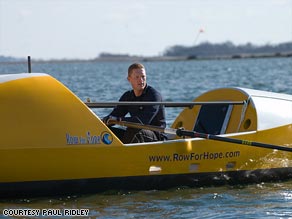
Paul Ridley Completes Solo Atlantic Row


According to CNN.com, 25-year old Paul Ridley has completed his solo row across the Atlantic, taking 88 days to make the journey.

According to the story Ridely would row as much as 12 hours per day, as he made his 2950 mile journey across the Atlantic Ocean. Even more amazing, the young man crossed the pond without a support vessel following in his wake, and in the process he became the youngest American to make that journey, and just the third person from the U.S. to do so at all.

Paul rowed in a custom made boat that he and his sister spent $60,000 having built. Back in 2001 their mother passed away from skin cancer, and Ridley dedicated this row to her and to raising funds for cancer research. His website, RowForHope.com, has more information about Paul, his cause, and ways that we can all help out.

Ridley says that he is happy to be home and off the water, and will now take some time to rest up and regain his strength. But he also says that there is a lot to be accomplished yet, and that he'll soon be back to work trying to raise funds and awareness for cancer research.

Congrats Paul! Awesome work. Glad you're home safe and sound.

Chủ Nhật, 21 tháng 8, 2016

Going Minimalist | Guatemala Foundry Photojournalism Workshop

In just over a week, I'll be traveling to La Antigua in Guatemala to join the rest of the faculty of the Foundry Photojournalism Workshop.

Since I'll be spending most of the week-long workshop teaching the fundamentals of multimedia, I won't have much time to work on any personal projects, so will probably only do some street photography.

It'll be an opportunity (and a joy) to leave behind the heavy DSLRs, and travel with a minimalist gear which, as shown in the above photograph, may consist of a Fuji X Pro-1 with a Fujinon 18mm and a Zeiss Touit 12mm, a Leica M9 with an Elmarit 28mm and a Voigtlander Nokton 40mm f1.4 as well. And just in case I need to record some audio, I'll pack a Marantz PMD 620, much smaller than my Tascam DR-40 that I use on my photo expeditions.

In the last Foundry Photojournalism I attended (Chiang Mai), I relied on these two "rangefinders", and it was a relief to be carrying one or even two of these comparative light tools instead of my two Canon DSLRs.

It's not my first time to Guatemala or La Antigua. I was there some years ago during its famous Semana Santa. Some of my photographs are on Las Tierras de Popol Vuh.

For those who don't know, The Foundry's goal is to help emerging photojournalists and documentary photographers to hone their skills, to have a chance to work with some of the world’s best shooters in the field, on real reportage projects, to create multimedia, to see some of the best work being done today, to collaborate, to make contact, plan future projects, develop your own vision and leave the workshop energized, and more committed then ever to concerned photography, storytelling and to documenting the world through the lens.

Thứ Hai, 15 tháng 8, 2016

Travel for Soul

My friends and family were kind of excited (and sometimes aghast too) by my umpteen travel narratives. So I finally decided to address a 'larger' audience.  And here I go.

The Blog.

My encounters and my perceptions with different cities and their culture that makes them special in a way they are! I LIKE travelling and more so travelling in a way I like. Whether it has been with friends, family or sometime alone. Most of the times it has been on a shoe string, some times for that 'value of money' . To save enough for the next journey.

Yes, for sure, the memories have been special, but more so, have been the journeys that made them so.

Travel For Soul. Simply Travel.

Thứ Sáu, 12 tháng 8, 2016

Himalaya Spring 2009 Update: Kathmandu Crowded,


The word from Kathmandu is that the streets are teeming with visitors as climbers, trekkers, and other tourist pour into the area with the start of the spring season. Journalist Billi Bierling reports that the city has come alive in the past week. She is busy tracking down many of the expeditions who are currently in town so she can report back to Miss Hawley on their intentions. Of course, she's also busily preparing for her own expedition to the mountain, as she'll be tackling the South Side of Everest as part of the HiMex team.

Meanwhile, ExWeb has more news from the Himalaya for us today. They are reporting that Joao Garcia has arrived in base camp on Manaslu and is now settling in on the mountain. His team is the first to get there so far, and Joao reports that a major snow storm is hitting the area at the moment.

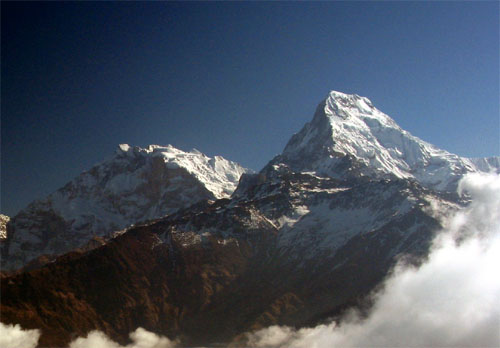
Valeri Babanov and Victor Afanasief are en route to Annapurna, but have run into a snag of their own. It seems that about 20 of their 30 porters abandoned ship and returned to Kathmandu, refusing to carry their gear higher than 3600m. The weather has not been great on Annapurna either, with snow and rain falling in the region, at the team believes that the porters didn't expect to work so hard for their pay. With few porters in the area, it seems that Valeri and Victor will have to hire some porters from a Korean team that is also on its way to the mountain. It could be another three days or so before they arrive however.

Finally, Edurne Pasaban is making her way to Kangchenjunga, where she'll make an attempt on one of the three remaining 8000m mountains she has yet to climb. She's locked in a competition between herself, Nives Meroi, and Gerlinde Kaltenbrunner to become the first woman to accomplish that feat. Nives is currently headed for Annapurna while Gerlinde has her sights set on Lhotse this spring. Yesterday ExWeb published a solid interview with Edurne on her expectations Kangchenjunga and going after the goal of grabbing all 14 of the big mountains.

Chủ Nhật, 7 tháng 8, 2016

CGAP Photo Contest 2014

Photo © Tran Dinh Thuong-All Rights Reserved
I started to frequently peruse Hanoi Times online to find tidbits of information for my forthcoming personal project in Vietnam, and noticed that it reported that seven Vietnamese photographers had won won prizes and/or recognition in a photography contest organised by a World Bank affiliate.

The CGAP (Consultative Group to Assist the Poor) is affiliated to the World Bank, and its annual photo contest seeks "to showcase the different ways in which poor households manage their financial lives and to raise awareness about the importance of formal financial services for people at the base of the economic pyramid."

I never heard of CGAP - and whilst readers of this blog know my stance towards photo contests- I took a look at its results, and found that many of its entries are impressive. This year's contest received a record 4,820 entries from professional and amateur photographers in 95 countries.

I urge you to take a look at the results of the photo contest here. Not only are these photographs impressive in their own rights, but they're from largely unknown (at least to me) photographers...and what a delight this is. Fresh names, fresh work...and none of the usual suspects who regularly  participate in such photography contests.

CGAP also featured all of the entries (yes, 4818 of them) with the names of the photographers on this page. Most of the entries are environmental portraits...some more travel photographs than documentary, but the general quality is really quite commendable.

So happy browsing, and be prepared to be impressed.

Thứ Bảy, 6 tháng 8, 2016

Amazing Mountaineering Video on Trango Towers

My friends over at Gorida posted an amazing mountaineering video last week that is amongst the best that I have seen in a really long time. It tells the story of four French guides who traveled to Pakistan to put up a new route on the Trango Pulpit, part of the Trango Towers, which offers some of the most imposing and impressive big walls anywhere in the world.

The video is quite long, but well worth the watch. It shows the team en route to the mountain itself, giving an indication of just how remote the region is, and then proceeds to show them climbing the face, and eventually reaching the 6050m (19,849 foot) summit. In between, you see some footage that will make your mouth drop.

So, sit back, and enjoy, because mountaineering videos don't get much better than this one.


Thứ Năm, 4 tháng 8, 2016

Travel to Con Dao - Vietnam

Con Dao beach
Con Dao beach
A secured Marine Nature Reserve, the Con Dao Islands (of which Con Son is the biggest and where you are prone to be staying) can be hard to get to, with sporadic flights from Ho Chi Minh City or an overnight ship from Vung Tau.. yet good lord, its worth the trouble! 

I must admit, the highlight of any going around Vietnam for me is normally the sustenance, yet the absence of any genuine consuming choices outside of the primary lodgings didn't still figure out how to disillusion, as the landscape around Con Dao is so astounding you'll need to stay for eternity. I think about all the spots I went to in
Vietnam Con Dao was conceivably a standout amongst the most wonderful I've seen.

The islands of Con Dao have a terrible history - they lay totally vacant until the French involved Vietnam and utilized the island as one expansive jail complex, where detainees were shackled, starved and beaten, constrained into hard work and subjected to some especially pitiless and uncommon discipline. Unfortunately when the Americans landed to "spare" Vietnam from Communism they kept the penitentiaries running, and made great utilization of a standout amongst the most primitive components, the 'Tiger Cages'; even once their horrific nature had been uncovered in the US media they essentially manufactured an alternate set deeper in the wilderness so the columnists wouldn't discover them. 

Today the detainment facilities serve as a stark indication of the repulsions of war, and a large number of the islands occupants are ex-convicts who chose to stay on the islands instead of come back to the terrain. Nowadays the primary businesses are angling and sending, and life on the island is extremely basic and undeveloped, however there are arrangements to sway more tourism to the islands later on. 

The whole territory is ensured by law, such a large amount of the islands are secured by thick woodland. A visit to the officers' station will clarify an extraordinary arrangement about the natural life living on the island, and they are exceptionally content to orchestrate visits around the wilderness or out to alternate islands, to see jeopardized species and to set out for some snorkeling and swooping. There are likewise various jumping schools on the island, especially Rainbow Divers. 

On our visit we procured a motorbike to investigate the streets around the island, and tried for climbs through the woodland and swam on totally betrayed shorelines, and in addition going to the jails and galleries. It was a genuine departure from Saigon, a complete difference to the cement, activity and commotion, and one we'll recollect for eternity. 

One of the key associations securing the nearby natural surroundings in Con Dao - and additionally in numerous other national stops crosswise over Vietnam - is WWF. On the off chance that you'd like to help preservation endeavors in Vietnam and conservation of the numerous jeopardized species there, we unequivocally propose turning into a part - it doesn't cost a great deal keeping in mind in Vietnam you can see for yourself the distinction they are making. 

Con Dao beach
Con Dao beach

On the off chance that you need to pass by pontoon there is a hydrofoil administration from Vung Tau to Con Dao twice a week at 350,000 VND every way, furthermore one leaving from Tra Vinh in the Mekong Delta which is controlled by Greenlines. The admissions and timetable are no more publicized on the Vietnamese dialect form of their site however, so it is worth checking before making the trek to Vung Tau.

Related post: Vietnam travel deals

Flights are controlled by VASCO however are lamentably not bookable on the web. 

An option may be to book online with Isango who are right now promoting a comprehensive two day visit to the island including flights which leaves from Ho Chi Minh City. Criticism on this administration would be increased in value.

Thứ Ba, 2 tháng 8, 2016

Everest 2009: North Side Update


It has been a relatively quiet week in Tibet by most accounts, despite the fact that Tuesday marked the 50th anniversary of the uprising against Chinese rule that resulted in the Dalai Lama going into exile. For his part, his Holiness urged his followers to maintain peaceful protests and remain non-violent in their approach to seeking freedom from China. That, coupled with a reportedly sizable military presence by the Chinese, helped to keep things calm.

That is, of course, good news for those hoping to go to Tibet this spring to climb Everest from the North Side. The borders to the country remain closed, as they have since the end of February, but as long as things continue to remain calm, there is a sense of optimism that the travel ban will be lifted on April 1st as scheduled.

This is good news for at least five teams that are still hoping to climb from the Tibetan side. Alan Arnette once again updated his Everest 2009 page yesterday with the news that two teams from Canada, an Indian team, and a large contingent from the Czech Republic are still planning on giving it a go from what is shaping up to be the quiet side of the mountain. Logistics seem to be of concern though, as without Himex fixing the lines, and such a small number of teams, it'll definitely take a group effort.

Alan also has another good interview in place, this time with Phil Crampton from the Altitude Junkies. Phil talks about his motivations to start his own guiding company, after years of experience in the mountains, his work with the climbing school in Lhasa, his philosophy on running his base camp and a lot more. It's a good read and offers some nice insight on the mountain as well.

Not long now Everest Junkies! Things will really pick up in the next few weeks. Hopefully the North Side will be open as planned, and things can start to get back to some semblance of normalcy on Everest. What ever "normalcy" is defined as at 17,000 feet.

Thứ Hai, 1 tháng 8, 2016

POV: The Disciples of Mehboob-Ilahi

Photo © Tewfic El-Sawy-All Rights Reserved
The Disciples of Mehboob-Ilahi is a gallery of monochrome candid photographs made at the shrine of a Sufi saint.

One of my favorite street photography haunts in Delhi is the area known as Nizzam Uddin (West) where stands the shrine of one of the world's most famous Sufi saints, Hazrat Nizamuddin Auliya (1238 - 1325). A Sufi saint of the Chishti Order in the Indian Subcontinent; he established an order that sought to draw close to God through renunciation of the world and service to humanity.

Raza Rumi in his book "Delhi By Heart" describes the settlement of Nizzam Uddin as "the quintessential Muslim ghetto of today's India. Congested, unkempt and stinking in parts, it retains a medieval air." 

It is medieval, and perhaps it is the reason why I make it a must-stop whenever I am in his capital city. Over the years, I've seen Delhi modernize itself, with flyovers, gleaming international and national hotels, wide avenues, colorful billboards hawking the most modern of appliances...but Nizzam Uddin stubbornly resists all these. Modernity in Nizzam Uddin is measured by the number of cellphone ringtones based on the Muslim call to prayer, and the app that shows the direction of Mecca.

I imagine it's the time warp experience I feel when I first enter the area from Mathura Road...right next to the police station....that attracts me to it. It's certainly not faith or belief as I have none of either, but it's certainly a visual (and perhaps cultural) transfusion that takes over my senses. I enter a photographic "zone" during which I am totally immersed in the visual patterns that emerge in the to and fro of the people who come to pay their respects to the saint. It's not only the saint who's buried there, but it's also where the poet Amir Khusrau and princess Jahanara Begum both rest.

It is here where the essence of Sufism was postulated by one of Nizzam Uddin's disciples; Abdel Quddus Gangoh who wrote this:

"why this meaningless talk about the believer,
the kafir, the obedient, the sinner,
the rightly guided, the misdirected, the Muslim,
the pious, the infidel, the fire worshipper?
All are like beads in a rosary."*

Sheikh Gangoh wouldn't have found much acceptance for his admonishment these days.

Pity.

*Delhi By Heart. Raza Rumi

Chủ Nhật, 24 tháng 7, 2016

The Rest of Everest Episode 102: Sweet Dreams


Wednesday brings us another new episode of The Rest of Everest, as we continue our adventure on Annapurna IV, a 24,688 foot peak that was the target of climbers Ben Clark, Josh Butson, and Tim Clarke last year.

In Episode 102: Sweet Dreams, we start things off with the boys sharing some of the very odd dreams that they've been experiencing while in base camp, including a reoccurring one from Ben that haunts him on every expedition he has been on.

From there we get some great footage of the team organizing their gear, with a good look at everything they have to take with them. Remember, on this trip, the intention is to not only reach the summit, but also make a first descent on skis as well, which makes for even more gear. Very educational for those wondering what it takes to get to the top of a big Himalayan peak.

Much of the footage is from in and around base camp once again, but there is some great footage of the mountain, including an avalanche crushing down the side and a glimpse of some other climbers higher up on the slopes. The episode ends with Ben getting philosophical about climbing and adventure. :)

Watch the full video at the Rest of Everest website or grab it directly from iTunes.

Thứ Sáu, 22 tháng 7, 2016

Diana Mayfield | Hà Nội Noir


During the just completed The People of Tay Bac Photo Expedition-WorkshopI gave its participants
the assignment of photographing the bustling street life of old Ha Noi, shooting from the hip, or on the fly, as much as possible to capture fleeting expressions, and the ever changing scenes of this exciting city.

The assignment also included of converting the resulting photographs to monochromes (hence the name Ha Noi Noir), and to produce a short photo-film with ambient sound recorded during their many walks in the streets and alleys.

This is Diana Mayfield's project, which mixes interesting snippets of street life...some humorous and some realistic. Ha Noi's street life centers on eating, busy traffic and small shops. One finds all of these in this short movie.

Diana Mayfield has a pedigree in travel photography that spans more than 20 years, and is one of the  original photographers contracted to Lonely Planet Images in 1998. Her photographs are widely published in books, magazines, brochures, advertisements, newspapers, web, etc. Her buyers include Qantas, Air France, Thomas Cook, National Geographic, Diners Club, Sunday Times, The New York Times, Le Monde, Rand McNally, Macmillan Educational and others.

She's represented by Getty Images, and has led photo tours to Italy, Greece and Spain for 8 years. She's now concentrating her cameras on S.E. Asia and India, with a particular interest in remote tribes and marginalised societies.

Thứ Bảy, 16 tháng 7, 2016

Tibet To Reopen April 5th


The Chinese have announced that they will reopen the borders to Tibet on April 5th, just ahead of the high season for tourism and mountaineering in the country. You may recall that they shut down the borders in early March for fear that there would be violent protests in the country to mark the anniversary of the Dalai Lama fleeing to India 50 years ago.

This comes as good news for the few remaining teams on the North Side of Everest, and for those that have been planning trips to Cho Oyu as well. As of now, I believe there are about a half-dozen teams still planning on climbing from the North, and with the China-Tibet Mountaineering Assocation promising to fix the lines, it's beginning to look like the patience of the teams that elected to stick it out, will be rewarded. They're likely to have a very quiet and tranquil base camp, two words that will not be used to describe the counterpart on the South Side. The lack of traffic will also likely prove very advantageous on Summit Day as well.

Hopefully the reopening of the borders will also mean an influx of tourists to Tibet. The country was already suffering economically thanks to a general downturn in travel due to global economic conditions. This past month there has been no foreign visitors at all to Tibet, which has further hurt the many people who earn a living in the tourism trade that is so vital there. Perhaps this is a signal that things will return to normal soon.

There are reports however that the Chinese military is still maintaining a strong presence in the country, and that foreign press and aid workers are still not allowed to travel unescorted. it seems that while the borders may once again be open, China still isn't ready to completely loosen its grip on Tibet.

Thứ Bảy, 9 tháng 7, 2016

K2 Doc Coming To Montana


Dr. Eric Meyer, who was on K2 last year when a series of circumstances, including the collapse of a serac, led to the death of 11 climber, will visit Montana later this month to talk about his experiences and the lessons learned on the mountain.

Meyer will give his presentation "K2 2008: Finding Meaning After Tragedy " at Glacier Discovery Square in Columbia Falls, Montana on Saturday, March 28th at 7 PM. The presentation is sponsored by Talus Outdoor Technologies, who are based out of Missoula, Montana, and is free to the public.

While climbing with a team of nine on K2, the second highest mountain in the world, last year, Dr. Meyer was caught up in the unfolding drama that took place. Meyer turned back from the summit himself, only to find that his training was needed in base camp when survivors of the disaster began to wander in. Eric treated a number of climbers for frostbite, exhaustion, and dehydration, while other members of his team assisted in rescue operations.

This is a unique opportunity to meet someone who was actually on hand for one of the biggest mountaineering disasters in mountaineering history. It should be very interesting to hear what he has to say and get his thoughts on the lessons that can be learned from the K2 tragedy. If anyone is attending, I'd love to get an account of what he has to say.

Thứ Tư, 6 tháng 7, 2016

Travel For Soul - Poem

Travel For Soul .... by Dr. Komal Joshi Mishra

For the journey is within,

Mesmerized by 'your' creations,

Speechless seeing the colors' you' painted,

Let my spirit go on,

Bless me to just' be',

When all the noises die out,

 and silence within, 

From senses to soul,

Keep me travelling,

For the journey is within.......


**
The poem is contributed by the guest, Dr. Komal Joshi Mishra. Her interests varies from Literature, Spirituality to meeting new people, apart from her profession, medicine.
**
Looking forward to your contributions on the guest posts.
**
Send across contributions to travelforsoulblog@gmail.com

Hoi An's Ancient Town - Vietnam Travel

Today, westerners know the Vietnamese city of Hoi A basically as a traveler terminus. On account of its nearness to the Marble Mountains and dazzling China Beach, Hoi A draws numerous guests every year. However at one point in its history, Hoi A was significantly more than a traveler end; truth be told, it was a standout amongst the most vital seaports in all of Southeast Asia.


Hoi A was initially settled by the Champa individuals, a Malay-Indonesian individuals who touched base in Vietnam from Java initially around 200 BC. In the first century AD, the Champas established Hoi An. Around then, the city was called "Lam Ap Pho", or Champa City.


The Champa Kingdom was an expansive and influential one, and in spite of the fact that My Son (which no more exists aside from a couple of remnants) was the Cham's otherworldly capital, Hoi A was its business capital. From Hoi A, the Cham slowly manufactured control over the flavor exchange, bringing incredible riches to the city. From the seventh to the tenth hundreds of years, Champa-commanded Hoi A ruled the exchange flavors and silks, with their impact extending as far west as Baghdad. The Cham sent out aloe and ivory, and supplemented their exchanging wage with computed demonstrations of robbery and procession strikes.

Tragically for the Cham and Hoi An, incredible riches brings extraordinary envy. Wealth, consolidated with assaults, didn't make for good associations with their neighbors. The Cham habitually collided with the Viet individuals north of their kingdom, and the Khmer individuals in Cambodia. Battling between the Cham, Viet, and Khmer debilitated the kingdom, lastly in the thirteenth century, Kublai Khan, the Mongolian warlord, attacked and involved the Champa Kingdom. In the late fourteenth century, the solid Cham pioneer, Che Bong Nga ("The Red King") figured out how to unite the Cham one final time and headed a concise resurgence. In the fifteenth century, the Cham fell unequivocally to the Viet individuals.


Under the administration of the Nguyen tradition, Hoi A progressively started to recuperate, and rose to conspicuousness at the end of the day. Amid the sixteenth to seventeenth hundreds of years, Hoi A, which around then was called Hai Pho (signifying "shoreline town"), at the end of the day turned into the most critical port in Southeast Asia. With a Japanese settlement toward one side of town and a consistent increase of Chinese, Dutch, and Indian dealers, Hoi A was a middle for worldwide exchange before such a term existed. In the early eighteenth century, Japanese and Chinese dealers specifically considered Hoi A the best place to try for exchanging all of Asia. A key stop on the Silk Road, Hoi A sent out its pottery as far away from home as Egypt.

At the same time Hoi A was bound to slip into decay and indistinct quality by and by. The Nguyen administration inevitably got to be contradicted to open exchange, trying to utmost the impact of outsiders in the country – a continuous issue that would torment Vietnam for the following two centuries. The shut exchange arrangement prompted Hoi A's stagnation, and when the Nguyen rulers changed their approach, Hoi A's decrease had as of now gotten to be irreversible.

At the same time, French impact in Danang was quickly expanding, making Danang the new community for exchange Vietnam. Besides, the new exchanging vessels developed amid the eighteenth and nineteenth century obliged a deeper port, something that Hoi A couldn't offer.


In spite of the fact that Hoi A's days as a critical exchanging focus were over, there was a profit to its decrease: as different urban communities in Vietnam modernized and took after the European lead in society, style, and riches, Hoi A remained a sample of a conventional Vietnamese port city. Amid the nineteenth and twentieth hundreds of years, Hoi A was everything except overlooked, permitted to proceed with its aged customs with little impact from the cutting edge, European-ruled world.

As an aftereffect of its detachment, Hoi A remained a little city with its history in place. In 1999, UNESCO named Hoi An a World Heritage Site, on the grounds that it was such a generally protected case of a fifteenth - nineteenth century Asian exchanging port. With UNESCO's distinguishment came traveler distinguishment, and the most recent decade has seen an alternate sort of business resurgence for Hoi An, as western voyagers slowly rediscover the appeal of this old Vietnamese city. Today, Hoi An is a typical stop along the trail for exploring swashbucklers, and in the interim, various bars, restaurants, and web bistros have opened to pander to travelers. Numerous specialty shops can be found in Hoi An, including conventional Vietnamese pottery and fabric generation. Specifically, Hoi A has gotten to be known for its tailors, who can create uniquely crafted garments for a small amount of what it would cost in the west.

In short, in case you're wanting to visit focal Vietnam, Hoi An ought to doubtlessly be at the highest priority on your rundown. Rich in history and society, and just a short distance from China Beach, the Marble Mountains, and the Champa Islands, Hoi A remaining parts one of the main jewels of Southeast Asia not yet invade with sightseer

Thứ Ba, 5 tháng 7, 2016

Old Stores of New York City

Photo © Tewfic El-Sawy-All Rights Reserved
I've thought of another photography project for the winter days...it won't be one that'll tax my photographic skills, but will certainly nudge me to read the many blogs and articles that focus on New York City landmarks.

Walking the West Village streets of New York City on a daily basis allows me to pass by (and in some cases, frequent) some of the few remaining old stores and restaurants that still exist in the neighborhood. It gave me with the idea to photograph these storefronts using my Fujifilm X-T1 camera to emulate a Rolleiflex's square format monochrome...just to give the resulting photographs a touch of "authenticity".

This project will not stop at the West Village, but will hopefully spread to various neighborhoods in Lower Manhattan. I already know more than a dozen stores that fit the bill....whether in Little Italy, Lower East Side or Chinatown.

I also intend to add a few historical trivia about each photograph whenever possible. For example, for the photograph of the Vesuvio Bakery in SoHo (above) that I made just yesterday,  there'll be this:

Vesuvio Bakery, (aka Birthbath Bakery), 160 Prince Street, New York 10012
The bakery opened in 1920 and was owned by Anthony Dapolito, who delivered Vesuvio bread on his bicycle as a child for many years before his death in 2003. Birdbath Bakery bought it, but kept the storefront as is.


I think that this sort of information would give context and historical texture to the photographs. I'm very far from being the first photographer or New York historian (professional or amateur) to think of, work on and complete, such a project...but it'll add to my personal appreciation of my adopted city.


Chủ Nhật, 3 tháng 7, 2016

About VietNam - Geography

Lying on the east of Indochina Peninsula with a separation of 1650 km from south to north, Vietnam is a standout amongst the most sentimental and characteristically delightful ends on the planet. The different the earth, geology, history, and society have made an incredible potential for the tourism business.


Vietnam is a nation with a past as rich as the dirt in the blasting green deltas. This past peruses like a sentimental legend, loaded with courageous battles and astonishing triumphs whereby this little nation held its society, retaining and adjusting the qualities of its adversaries yet never losing its customs or feeling of history. In Vietnam, conventions convey genuine importance. Aged saints are still revered at beautiful sanctuary celebrations, individuals respect their precursors, and town older folks show estimations of diligent work, cordiality, and dutiful steadfastness. The greater part of ethnic gatherings live in remote regions and take after age-old traditions, subsequently Vietnam has an incredible opportunity to offer unparalleled social investigation.


And in addition fine climate, there is fabulous regular landscape and noteworthy locales. Vietnam's most noteworthy asset is its agreeable, inviting individuals. Since a long time ago shut to the outside world, Vietnam holds a beguiling honesty that most traveler districts need. Yet in the decade since the nation opened its avenues to guests, the nation has assembled world-class lodgings and tourism offices with global benchmarks and conventional Vietnamese neighborliness. Vietnam is prepared to assume a remarkable experience.

Thứ Bảy, 2 tháng 7, 2016

Patagonia Wants Your Classic Climbs


The spring catalog from gear maker Patagonia has a theme that focuses on classic climbs, which they define as "a handful of routes that consistently capture the minds and hearts of climbers from around the world."

The Cleanest Line, the official blog of Patagonia, has posted their very select list and it's tough to argue with any of them. Each of the climbs also comes with a link to a field report with more information as well. The routes that they chose are as follows:

The Nose. High Exposure. Pinch Overhang
Aguja Guillaumet, Chalten
Hotline, Yosemite
Vandals, Shawangunks
Ahab, Yosemite
Zap Crack, Squamish

There you have it. Six great climbs that are hard to argue with. Would you add anything to the list? Anything they missed? How about The Eiger Direct? It seems to meet the category for me. Great list though.