Thứ Tư, 15 tháng 6, 2016

Verdict | The People of Tây Bắc Photo Expedition

Photo © Tewfic El-Sawy-All Rights Reserved
Having had more than a week to mull over what worked and what didn't on The People of Tay Bac Photo Expedition-Workshop, I come to the conclusion that it earns a B....not a B+, not a B-...just a plain B.

However, the trip's logistics and accommodations were faultless, and all the credit goes to the travel agent I work with in Hà Nội. They were responsive and on the ball at all times.

I think the prevailing extraordinary high humidity levels we faced all through the trip played a significant role in dampening our energy levels (certainly mine were), especially in the streets of Hà Nội. That said, and set aside...here's what I thought were home runs (or third base hits).

1. Hà Nội Street Photography:


Photo © Tewfic El-Sawy-All Rights Reserved
A definite home run.

Hà Nội's streets are just ripe for the taking of photographs...whether monochrome or color. The scenes are there and are sometimes too numerous to choose from. Visual (and aural) overload besieged my senses for the first one or two days, but then it passed and I immersed myself neck deep in the flow of life.

The Hà Nội Noir assignment to the group participants was especially well received, since it introduced them to the street photography's 'on the fly' element that they were not entirely familiar with. The shooting from the hip technique was experimented with, and provided an inventory of interesting images to each participant.

2. Hội An Fishermen:
Traditional Fisherman. Photo © Tewfic El-Sawy-All Rights Reserved
Another home run.

I had pre-arranged through Eviva, my local travel agents, a dawn-time trip on a local boat to photograph the fishermen using traditional netting systems. We boated to the mouth of the Thu Bon River to photograph these large fishing nets (see top photograph and the one above). These large contraptions are lowered into the water to catch fish during the night. They are slowly raised and lowered by the fishermen using foot-powered winches.

These must have been the most photogenic 4 hours of the entire photo expedition. The weather was just perfect, with the sun rising on cue and the whole experience was phenomenal. The subsequent hour-long visit to Hội An's main fishing harbor/market was also interesting, and offered many photographic opportunities.

3. Hầu đồng Ceremony:


Medium in a trance. Photo © Tewfic El-Sawy-All Rights Reserved
Home run, because it's a ceremony I've never witnessed (nor heard of) before.

Hầu đồng is also known as lên đồng, and is a ritual of spirit mediumship practiced in Vietnamese indigenous religion and Đạo Mẫu, a Vietnamese mother goddess religion, in which followers become mediums for various deities.

It was by pure serendipity that we witnessed and photographed such a hầu đồng full ceremony in Bac Ha, and a rehearsal in Sa Pa. The full ceremony may last up to seven hours, and it begins with petitions to Buddha and to the deities for permission to carry out the ritual, after which the medium sits in the middle of four assistants, whose job it is to facilitate the medium's incarnation of different deities and spirits. It's a fascinating spectacle during which the medium (dressed in pink in the above photograph) chants, dances and changes in no less than 6 or 7 costumes of different colors during the ceremony.

Due to a misunderstanding, a member of our group committed a grave offense during the ceremony in Bac Ha, but a sincere apology to the temple's authorities (after which I was offered glasses of rice wine to drink to help the reconciliation along) allowed us to continue photographing. It's a testament to the generosity of the Vietnamese temple's congregation that the incident was so promptly forgiven.


4. Hội An Streets:


Photo © Tewfic El-Sawy-All Rights Reserved
Yes, Hội An is a tourist town. What can we expect from a small town recognized as a World Heritage Site by UNESCO? But setting that aside, it's a wonderfully atmospheric place with an incredible wealth of stunning backdrops for street photography, for travel photography and for fashion/model photography.

I would definitely consider staying in Hội An for a week or so. Rather than stay in the lovely and posh (but sort of generic) Hoi An Hotel, I'd stay at the Vinh Hung Hotel, an upscale but tiny heritage hotel located in the heart of town. And have Cao Lau, the local signature noodle dish  at Miss Ly every day!

It'd be wonderful to take my time...and indulge in slow street photography. In other words, pick a spot (preferably with a cup of coffee or a La Rue beer), wait and cherry-pick whatever happens in the street. As I wrote in a different post, I'd also enjoy fusing travel photography to ethnic/modern fashion photography. The style can be posed...with static portraits, or can be pseudo environmental-street portraits.
Photo © Tewfic El-Sawy-All Rights Reserved
There's no limit to the willingness of eye-catching persons, whether locals or tourists (such as the lovely Vi in the above photograph) to pose for photographers. Hội An is a magnet for newly-weds (or about to be married) who come here with their make-up artists and photographers.

Photo © Tewfic El-Sawy-All Rights Reserved
The pretty and lively bride in pink loved my suggestion that she pose under the bird cages...I told her that it'd be an appropriate setting since they were lovebirds. She left her photographer, and ran to the spot I indicated. Nothing is set up in this photograph...the brooms, the bird cages, the bicycle...all was left as is. That's Hội An.

Photo © Tewfic El-Sawy-All Rights Reserved
A bride-to-be is being dolled-up by her make-up artist, just around from the famous Japanese Bridge. It's these quotidian scenes that attract me visually to places like these. Yes, here the bride saw the photographer...but I'd wait for as long as it took to become just part of the background, and for a scene (a story) to develop.

Have I said that Hội An was a home run? If I haven't yet, then yes...it is.

5. The Tây Bắc Region:

Flower Hmong in Bac Ha. Photo © Tewfic El-Sawy-All Rights Reserved
I need to be quite emphatic about this: I resent blue tarpaulins, motorbike helmets, motorbikes and baseball caps photo-bombing my photographs.  

So no home run for the northern region of Tây Bắc, which for us mostly meant the markets of Bac Ha, Can Cau, and Coc Ly. We had to pass on Xin Cheng market due to Typhoon Kalmaegi. The exception was Sa Pa, which is a nice little town with some opportunities for street photography and ethnic photography of the H'mong.

Bac Ha market is the largest of the region, and perhaps because I had been before, it didn't have the visual umph it had when I was there in 2012. One thing for sure has changed...the area where the Flower Hmong, Dzao and others ate their breakfasts and lunches was moved by Bac Ha municipality (or whatever it's called) from the center of the market to the right of its entrance. It's now more orderly, but it removed the ad hoc feel that the market had before the move.

And because of the threatening rain, blue tarpaulins were stretched all over the stalls...giving out a rather nasty light to faces and clothes. 

That said, Bac Ha is still the granddaddy market of the region. As we had spent the night at the nearby Sao Mai hotel, we had the market almost to ourselves until 10:00 am. When the tourists arrived with their GoPro and heavy cameras, we left for breakfast.

Flower Hmong Matriarch in Can Cau. © Tewfic El-Sawy-All Rights Reserved
Can Cau Market is held on Saturdays, and is predominantly frequented by the Flower H’mong. While not far from Bac Ha, it took us about 3 hours to drive from Sa Pa. Much smaller than the Bac Ha market, it doesn't have its 'charisma'. It'd be easy to blame the humidity, but it was quite high...and it drained us of energy quite rapidly. The locals seemed to take the humidity in stride, carrying umbrellas and sometimes fans.

Flower Hmong family in Can Cau-© Tewfic El-Sawy-All Rights Reserved
Coc Ly market is held weekly on Tuesdays, and is also crowded with Flower H’mong. Only 35 kilometers from Bac Ha, the roads are quite nasty and bumpy...and were probably made worse during the rainy season. It's perched on a hillock, and it struck me as one of the least interesting. I was amused when a meddlesome American woman kept watching me photographing a very amenable Flower Hmong for a while, and then told me to stop because I was "harassing" her.

In short, there indisputably were some interesting photographs to make in these markets, but group tourism's tentacles have reached these markets, and they've lost some of their authenticity. I suspect many of the implements and products sold to to the locals are made in China...while the handicrafts presumably made by the local minorities seems to be shoddier than usual.

In a future iteration, a People of Tây Bắc Photo Expedition will continue to be based in Sa Pa but will venture to markets and villages further afield...as far as possible from tour buses, it that's possible.

6. Sa Pa:


Hmong in Sa Pa market. Photo © Tewfic El-Sawy-All Rights Reserved
I like Sa Pa. The Victoria Hotel is great...although their staff can be somewhat impersonal. But that's what happens when your guests are mostly tour groups. The restaurants are welcoming, all have free wi-fi and the food is quite good. Not as good as Hoi An...but good.

Yes, I like Sa Pa...it wasn't misty nor cool as it was in 2012, and the main square is now empty of the Hmong vendors that had taken it over in the late afternoons. They've been chased away, and given a dreary space above the market to sell their goods. Presumably to have them pay a permit fee or something like that.

Along with the group, I enjoyed doing some monochrome work in the tiny market; exploiting the chiaroscuro of its alleys, and the black dress of the Hmong as best I could. It was in Sa Pa that I also stumbled on a Hầu đồng rehearsal ceremony, which in a way prepared us for the real thing in Bac Ha.


Hoi An Lanterns. © Tewfic El-Sawy-All Rights Reserved
So what would I do differently?

If I was omnipotent, I'd change the weather. It affected the attendance of the Tet Trung Thu street festival; it prevented us from attending the least touristy market in the northern region and it exhausted us.

But within my direct control, I'd reduce the number of days in Hà Nội and increase the stay in Hội An. I'd still stay in Sa Pa, spend a day in Bac Ha, but travel much further in search of traditional small villages that are not on the tourist trail.

Red Dzao in Ta Phin. Photo © Tewfic El-Sawy-All Tights Reserved
Now, the finale for the those who like statistics. My estimated usage of my cameras was as follows:
Fuji X-T1 + Zeiss Touit 12mm f2.8: 75%
Fuji X-Pro1 + Fujinon 18mm f2.8 : 10%
Leica M9 + Voigtlander 40mm f1.4: 15%

(I used the Fuji Zoom XF18-135mm f3.5-5.6 for the fishermen photo shoot, and another time in Hà Nội 
around Hoàn Kiếm lake.)

Did I miss my Canon 5D Mark II and my panoply of primes and zooms? 

No. Not once.

Thứ Bảy, 11 tháng 6, 2016

Bac Ha | Report Five | The People of Tay Bac

Photo © Tewfic El-Sawy-All Rights Reserved
Rather than rising pre-dawn to drive from Sapa to Bac Ha in order to reach its famous Sunday market early, I structured the itinerary in such a way that we spent the night at the Sao Mai Hotel. Naturally, Bac Ha being a weekend destination for most tourists, the Sao Mai Hotel is the best there is in the small town...which doesn't mean much. That's said, its location is extremely convenient as it's only a couple of hundred meters from the Bac Ha market.

Once again, I took a walk along the streets of Bac Ha late afternoon Saturday, and wafts of religious chants emanated from a small temple. Asking around, I was told it was a hầu đồng ceremony, but I couldn't get firm information as to when it'd be over or how long it was to be performed.

Rushing back to the Sao Mai, I gathered the rest of the group and we photographed the ceremony  until late at night. Before describing what hầu đồng is, I must express my utter amazement and gratitude to the local Vietnamese congregants at this temple who welcomed us with open arms, and showered us with their tolerance.

Hầu đồng, also known as lên đồng, is a ritual of spirit mediumship practiced in Vietnamese indigenous religion and Đạo Mẫu, a Vietnamese mother goddess religion, in which followers become mediums for various deities. The main ritual, which may last from two to seven hours, begins with petitions to Buddha and to the deities for permission to carry out the ritual, after which the medium seats him or herself (both men and women may act as mediums) in the middle of four assistants, whose job it is to facilitate the medium's incarnation of different deities and spirits. (Wikipedia).

Although we were restricted by the temple's small space, I managed to photograph at will until I ran out of SD card space. I also recorded the live performance by the musicians; music that accompanied the medium as she went through the various incarnations. The live recording was badly affected by the small space of the temple and the resultant reverberation of the percussion and the gong.


Photo © Tewfic El-Sawy- All Rights Reserved
It was a pre-breakfast short walk to the Bac Ha market early morning Sunday, where the villagers had already arrived and spread their products to sell. It looked somewhat different than how I remembered it, and May Lan (our H'mong minder) agreed. The local authority had moved the eateries down to the entrance of the market.

That early, we were the only non-local people around....but I knew it wouldn't last long when tourist buses would arrive. There were mostly Flower H'mong, and a few Black Dzao, and Tay. The animal market was especially busy, with buffalos being bought and sold (one sells for about 30 million dongs or $1500...not much). A few local tribespeople were selling puppies and small dogs....whether for pets or otherwise.

Engaging the women vendors without buying any of their wares is not too difficult. Many of them have a very keen sense of humor, and are willing to have fun and be teased. A few are dour, and don't respond to bantering, and a few genuinely don't like to be photographed. Older women cover their faces, not because they don't want to be photographed for cultural reasons, but because -as they told May Lan- they were too old and had lost their beauty.

Just at the entrance to the market, there's a small restaurant where we had breakfast. It seemed its Pho Ga was the best some of my group had ever had.


Thứ Năm, 2 tháng 6, 2016

The French nickname their dear city, “Pearl of the far East”.

With numerous names and a populace of 9 million, Ho Chi Minh city climbs as the adolescent pioneer of all Vietnamese urban areas.

Not at all like the old woman Hanoi moderate, obsolescent, held way of life, Ho Chi Minh city goes hard and fast in the cutting edge way of life. The city is constantly in a hustle: clamoring, loud, singing, amusing, the individuals: uproarious and benevolent.


Related post: travel Vietnam

The region now called Saigon once were void marshlands having a place with Cambodia. Flux of Vietnamese transients overwhelmed the territory (fleeing from the Trinh - Nguyen common war of the seventeenth century. The region later got to be significantly Vietnaminized, until later totally acclimatized into the nation Vietnam by the Nguyen tradition.

The colonizers created the effectively clamoring exchange range into a high class, present day, European impacted city suitable for exchange, excitement and business.

Saigon's  populace has now surpassed 9 million. Other than the Viet ethnicity, Saigon has a vast extent of Chinese relatives. The Chinese movement populace focused around the "Cho Lon" (Big market) zones of region 5,6,7 and 11, structuring Vietnam's "Chinatown" (however I figure it mixes with the view here more than say, Toronto).

Thứ Bảy, 21 tháng 5, 2016

Trip to Prague Castle that is Surprisingly Splendid

The sight across the cliff of the Prague Castle rightly summed up our visit to Czech. Surprisingly Splendid !

Been to quite some number of castles/forts in Rajasthan, India, what I thought would lay ahead at Prague's Castle area would be predictable. By all means, it was not.
Prague Castle Area

Prague Castle area - Splendid !
While we had a remarkable Road Trip to Prague and an equally incredible day spent at the Old Town of Prague, yet  we weren't sure that what would lay ahead us, would be as special as it was. Prague's Castle area is refreshingly different !

 ** Prague is Refreshing, Prague is different ! **

First things first. Prague Castle area is not just about a single monument (the Castle). It's about several grandiose buildings, lush green gardens, well kept monastery, bustling square and last but not the least, the Castle.

Take Tram 22 for the Castle area. While Trams are indeed the best way to commute, it is important to be aware that, it is better to start uphill for the Castle area and Lesser Town. Because, if you do so, you'd save some precious time and energy that you'd love to have by your side to soak in the mesmerizing beauty of Prague! So start early for the Day, and head straight to the point up north to the stop Prohorlec. Then across the splendid panorama of Strathov Monastery you can spend an hour or two gazing its architecture and around. Be sure though, about the timings of the Monastery, else you could miss the splendor inside! There are some options around to spend your time in its convent and library. There's a decent restaurant also, good for some snacks on the go. You'd definitely realize that Prague is refreshing and is quite different. In some sense, your perception about Prague would change.


Prague - Strathov Monastery
Prague - Strathov MonasteryStrathov Monastery
**  Walking Tours for Breathtaking Views **

While on the descent, there are some mesmerizing points for the views of the city, which are definitely not to be given a miss. These points are generally not visited around that often.  If the day is clearer, the views get even better. There is a restaurant around, but as the case is with these prime places, the food is not worth the price.
Clean Skies - Excellent Views
The lush green mountains lead you to some scintillating views of the city. The caveat though is to, just follow(read piggyback), the many walking tours that lead you to these views. As you soak in the beauty, next in line are Castle Square and the Castle itself.
Prague - Breathtaking
Prague - Breathtaking !

** Gardens **

But before that, do make use of the splendid gardens on your way to the Castle. They are clinically maintained , and with beautiful building on their bay, they make a strong contention for spending some time. As you walk downhill for the Castle , you'd pass by the Castle Square.
Prague Castle area - Beautiful Gardens
Prague Castle Area - Architecture Marvel
Prague Castle Area - Across many gardens
Beauty all around
Beauty all around
Glorious buildings - Prague Castle Area
** The Castle Square **

The Castle Square is the feather of the cap of this journey. It's a bustling place which is full of energy of the visitors. The cobbled street, excellent view of the city on one side and the Castle on the other, is a great combination altogether. In short, it is an eclectic mix of architectural grandeur and flowing human energy. There are a lot of spots fit for photography.
Prague Castle Square

** Guards' Changing ceremony **

The Guard changing ceremony is a treat at the Castle square. There are specific timings and it is highly recommended that they be checked out at the reception itself. Generally the 'ceremony' takes place around noon. Smartly dressed guards change their positions in a high intensity rhetoric. Their immaculate sartorial traditions with their smart military moves against the august Castle is a treat. It's a must if you are in Prague. Lot of euphoria gathers around the time the ceremony and people strive for their special photography moments. At times, you may feel that it's a bit stretched though.
Prague - Beautiful
Prague - Beautiful
** The Castle **

The castle is a grand architectural marvel. There are a some places open for visitors, for this place that is currently the seat of the president of Czech. Few of them qualify as paid entries too. It is important to decide the interests and then head in according to available time. Once you are through visiting the Castle, the journey for the downhill begins, There aren't many places of tourist interest hereon, with typically old houses lining the street. There is a famous 'Vaishnavite' restaurant too serving good Indian vegetarian food.
Splendid Views - Prague
** Souvenir Shopping **

There are a lot of souvenir shops downhill the castle. They are expensive, but at the same time offers good choice. There are few vintage cars offering few hours ride of the city too.
Downhill Prague
Downhill Prague
** Off to Charles Bridge **

After the end of the tour for the Castle , heading to Charles Bridge can be a great next option. (Covered in coming posts)

** Food **

If you are looking for some good food at not so great prices, then it's better to be at the downhill the castle. The restaurants atop are overly expensive and for sure not worth the price you pay.

*** Travel Facts ***

Stay Duration :        3 days at Prague
Stay Place:              MH Apartment, Prague, Recommended
Travel Companion : Better Half
Travel Phases :        3 days, spent exploring different things
Arrived through:      Agency Bus from Vienna via Brno, Recommended
During:                    Sept, 2013

*** Did you like this Post, Did I miss something about Prague, or rather anything you'd like to share about the post or Prague. Looking forward to your comments on this Post. ***

Thứ Sáu, 20 tháng 5, 2016

Season's Greetings!


I wish my readers a very merry Christmas and a wonderful New Year!

May our next year be filled with superb light, exotic travel, colorful festivals and new (and even better) photo-taking devices!

Thứ Tư, 11 tháng 5, 2016

Eugeni Gay Marin | Vietnam

Photo © Eugeni Gay Marin- All Rights Reserved
I just love this gem of a photograph. The melancholic expression of both the musician and his muse (?) are so expressive that I can construct so many stories by just looking at this photograph for a few seconds....and that's what storytelling is all about. Is it a story of unrequited love? Is she remembering an old flame? The musician's overly dyed and carefully coifed hair tells me he could be a washed-up performer, now playing his instrument in cheap joints...still clinging to his youth.

To my mind, this is a Vietnamese fado scene;  the Portuguese music genre characterized by mournful tunes and lyrics.

Eugeni Gay Marin's Vietnam gallery has a few more of his photographs in this lovely country, but unfortunately too few.

However, his photographic project of documenting Punjabi Sikhs is also very interesting, and I've enjoyed viewing it, especially as I haven't had the opportunity of visiting Amritsar or Harmandir Sahib (the Golden Temple) yet.

Eugeni Gay Marín is a Spanish photographer whose images were published in various media such as El País Semanal and Lonely Planet. He participated in two collective books and has been selected to show his work in several festivals. He co-founded El Observatrio project, specialized in monitoring photographic student work and in 2014 he began Fotoholica, a digital retouching company for photographers. In 2014 he won the photography FNAC New Talent in Spain for the work “From Quantum Island”. This project was exposed in the Voices Off festival in Arles and won the “Le prix Révèlation SAIF 2014”.

The Travel Photographer's 2014 Most Popular Posts


In first place on The Travel Photographer blog during 2014 was POV: The 'Unbearable' Lightness of Fuji X Series in which I explain my decision to leave my heavyweight DSLRs home, and travel to Vietnam with just a Leica M9 and the Fuji X Pro-1. It was first photo expedition-workshop that saw me DSLR-less.


In second place, another POV post with Fuji X-T1 Goes To Vietnam in which I describe my experience with the Fuji X-T1 and how it performs while I was traveling and leading a photo group for almost three weeks. Not only did it perform very well, but I didn't miss my Canon equipment.


In third place is the post titled Leica M9 vs Fuji X Pro1 | New York's Chinatown, in which I compared photographs made with these two cameras during New York's Chinatown Parade. The main thrust of the post is to compare virtually identical photographs made with a Leica was coupled with an Elmarit 28mm f2.8, while the Fuji X Pro1 was coupled with a Fujinon 18mm f2.0.


In fourth place is the post titled Verdict | The People of Tây Bắc Photo Expedition; a lengthy and detailed review of what worked and what didn't during that particular photo expedtion-workshop. I graded it (perhaps too harshly) as a B. Members of the group thought I was too harsh, and perhaps I was...but while the travel logistics were flawless to a large degree, there were a few negatives out of my control that affected the trip.


Rather surprisingly I thought, the fifth place most popular post is about the Zeiss Touit 12mm | Fuiji X-Pro 1, in which I explain I had decided to buy a Zeiss 12mm f2.8 Touit. My reasons were that it was a solid, all glass lens that felt well made, and while it's manufactured in Japan (as if that is a downside), it feels 'German Zeiss'. And it's hand-built.

Most of my blog's most popular posts relate to cameras and lenses...ie gear. Hardly surprisng since photographers, whether travel or otherwise, are primarily interested in opinions and points of view about gear.

Thứ Hai, 9 tháng 5, 2016

John Rowe | The Donga

Photo © John Rowe-All Rights Reserved


For a complete change of pace, here's an Ethiopian feature.

The Donga  (also called Saginay) is the stick-fight practiced by the Suri, a tribe in the Omo Valley. The Suri  adopt stick fighting - which is a traditional way for young men to impress girls. The often bloody fight is a demonstration of bravery, and underscores the men's desire to become cattle warriors.

Generally, stick fighting is practiced so young men can find wives. The ideal time to stick fight is just after it rains, and involves various Suri villages. With 20 to 30 people on each side, the stick fights can be extremely dangerous despite having referees to make sure that rules are followed. It's said that the fights have recently led to fights with guns, in which people have been wounded.

Sometimes when a young man has a dispute over a woman, he challenges his rival to a stick fight. His village joins him by starting the age-old ritual by singing, and carrying their fighting sticks that are carved in the shapes of penises (of course).

The Donga
is a gallery of incredibly compelling monochrome photographs of this ritualistic fight by photographer John Rowe.

John Rowe is a photographer and film maker who first trained at the US Navy School of Photography when he was 18 years old. He's also a successful businessman who has founded and managed companies which develop software and digital media for the entertainment industry.

He has also devoted a tremendous amount of time, energy and financial assistance to humanitarian work in Africa. He is also helping to save babies born in the Omo Valley from the brutal tradition of Mingi. Mingi is a tradition practiced for many generations by tribes of the Omo Valley like the Kara, labels certain children as “cursed.”

For more on John's efforts on this worthwhile cause, drop by PetaPixel's post on the subject.

Thứ Hai, 2 tháng 5, 2016

Saigon - Ho Chi Minh city

While it may not be the capital of Vietnam politically, you just need to invest a brief time in Saigon to perceive how it the pace of progress in the south is forming the nation. The biggest city in the nation, with in excess of 6 million tenants (and in excess of 8 on the off chance that you tally brief occupants), Saigon is a packed, quick, uproarious, and overpowering spot at the outset. Burrow a little deeper, however, and you'll discover there is a vitality and dynamic quality to the city that can be extremely irresistible. 

Duc Ba Church
Duc Ba Church


Overflowing with life, Ho Chi Minh City (HCMC or Saigon as the greater part of its occupants still call it) offers an extraordinary arrangement for voyagers and exiles apparently equivalent. There's an incredible arrangement to see and do, and no lack of tasty treats to consume, whether at top restaurants or just as delectable road stalls for a few dollars. 

The pace of progress in the city is amazing - regularly structures are pulled down so more up to date, shinier ones can be raised in their spot. In around ten years the city went from a city of 3,000,000 bikes to 5,000,000 motorbikes, heading the Saigon's exceptionally one of a kind brand of movement. Presently auto use is on the ascent gridlock undermines to set in, however it is yet an alternate indication of how quick lives are changing in HCMC, and how more individuals are functioning out of destitution. 

Yet with a more critical look you can discover excellent old structures and also striking new ones, cool, smooth bistros with enclosures that are situated back from the street to provide for you a minutes rest from the frenzy outside, unwinding spas and cool pools to swim in. 

Saigon river
Saigon river

Related link: Vietnam travel

There's additionally various extraordinary day treks that is possible from the site, whether to Tay Ninh mountain and the Cao Dai sanctuaries in the North West, the renowned Cu Chi Tunnels where the safety propelled sneak assaults on the US drives situated in Saigon, vessel excursions to Vung Tau, the Mekong Delta or to Can Gio, the gigantic range of mangrove marshes to the south, known as 'the lungs of the city'.

Thứ Tư, 27 tháng 4, 2016

Shop till you drop, and feel good about it - VietNam Travel

It began with a modest fired teapot and that prompted a lacquered bamboo dish in a brilliant conceptual example, then a hand-woven scarf. It was simply the begin of my voyage through Vietnam, and I was at that point snared.


I am not generally a shopaholic, yet here not just did the costs speak to my Yorkshire sensibilities – nothing unless there are other options things cost more than £2 – however I could persuade myself that this retail treatment was doing some great. There's numerous types of tat on special to sightseers in Vietnam, much of it made in China. Anyhow I knew my using would have any kind of effect to neighborhood lives in light of the fact that I was on vacation with an association which makes that its mission.

Related post: Vietnam travel


Traidcraft, the individuals behind the British inventories and blessing shops, has collaborated with cycling-occasion administrator Saddle Skedaddle (one of its organizers used to work for Traidcraft) to offer treks to the creating nations the philanthropy sources its products from. The thought of Traidcraft's "Meet the People" occasions (there's no cycling on this specific excursion) was to give individuals who were at that point a piece of the reasonable exchange development – volunteering in shops, running stalls – the opportunity to see where items began.

Actually for those who've never been close to a reasonably exchanged soil grown foods bowl, the visits offer a special viewpoint, on individuals and societies and touring. (They likewise run outings in other Asian nations, and in Africa and Latin America.) Plus you get to shop till you drop, and like it.


My teapot and dish originated from a showroom in Hanoi run by Craft Link, a non-benefit association that works with 60 artisan aggregates in northern Vietnam. Over tea and little cakes upstairs, we got notification from administrator Ms Tran and more youthful Ms Thuy about its work discovering markets for crafted works as a method for keeping customs alive and assuaging neediness. It's not philanthropy: they help bunches for several years, with preparing and monetary backing. Also they generally work with ladies.

At that point we were let detached in the shop: our gathering of 15 Brits gobbled up silk satchels and scarves, sacks, ceramics and gems. There was still more than two weeks of the visit left, yet hey, a flawless little clasp won't consume up much space.

Following day, talking on the transport as we cleared out Hanoi for an outing heartland, Ms Thuy let me know she's proudest of the impact Craft Link has on the part of town ladies. Consider, she said, your normal Vietnamese agriculturist: he's been reveled from early stages (while his sisters buckled down) and graduates to the nearby diversions of wife-beating and drinking rice wine. Despite the fact that money salary is just about $100 a year, there's bounty to consume, from the chickens, fishpond, rice paddies and vegetable arrangement. At that point the wife finds out about these city individuals who'll pay great cash for her weaving. What's more quickly she's using her days sewing in a chipper gathering with her companions, as opposed to weeding the paddies and rubbing his feet. Furthermore he can't gripe, on the grounds that she accumulated almost $400 a year ago: its paid for a TV, and he's trusting for a motorbike.


Ms Thuy once asked a hilltribe lady what had changed since she began offering painstaking work. "Presently I can grin," she said, uncovering a column of pretty teeth. Her teeth had spoiled when she was in her 20s, however her art cash had paid for a set of crowns.

Our terminus was the Mai Chau valley – home to ethnic minority White Thai individuals – however we halted first at Ha Thai town, which represents considerable authority in lacquered bamboo. A family bunch in one workshop were finishing a US request for 3,000 bowls with an exquisite painted stripe – they get 30% of the last cost. We viewed the age-old methodology of part bamboo, bowing it, snaking it round a mold then sanding it before applying 15 layers of (nourishment safe) cashew-nut finish. Up the road, men and ladies were utilizing globules and coconut shells to make beautiful adornments – ooh, yes, my little girl will like that bangle, with its white-on-dark example.

Some in our gathering perceived these items from Traidcraft outlets back home and could discuss how well, say, a specific vase offers. That was what made this trek distinctive: we were in small towns vacationers would never regularly see, not as outsiders, yet as a feature of the exertion to bring flourishing to these groups. (All the more motivation to take home one of those really shaded trays, as well.)

The area of Mai Chau, 100km from Hanoi, is exemplary rustic Vietnam: rice paddies extending level as a green fitted rug to a ring of rugged mountains, with tapered caps and water bison spotting the fields. This is the place a considerable measure of Craft Link's materials are made. A companion's approaching birthday came up with a decent rationalization to get a delicate scarf in quieted green and red. One weaving machine on the edge of the town was being worked by an adolescent and ambitious incapacitated lady: as we passed she gave pursue in her wheelchair with a determination of her products

Thứ Sáu, 15 tháng 4, 2016

Jon Bowermaster is off to Madagascar


Speaking of Jon Bowermaster, when last we checked in with him, he was in the Maldives, investigating the impact of rising sea levels on that nation's future. He has since moved on to the Seychelles Islands, where he discovered that pirates have become a very real threat.

His journey across the Indian Ocean wasn't done there however, as he has proceed on to Madagascar, an already poor country that has been hit hard by the global economic recession, and is now struggling with a great deal of political unrest as well. Tourism has been a boon for the island nation for a number of years, and two recent animated films have actually helped that industry. But in this economic environment, many people are not traveling, and with the unrest in Madagascar leading to riots in recent month, those that are venturing abroad, have elected to avoid the country for the most part.

It seems Jon's tour of the region won't end here either, as judging from this map, he'll next be moving on to the Comoros Islands, a small island nation with a rich and diverse history. From there, it's on Mozambique before proceeding north to Tanzania. This trip makes my little foray into the Amazon seem like I was just dipping my toe in the water!

Be sure to check back with Jon's blog regularly. His updates are always insightful and interesting, and I almost always learn something new about the places he visits. They also almost always wish I was tagging along too!

Thứ Năm, 14 tháng 4, 2016

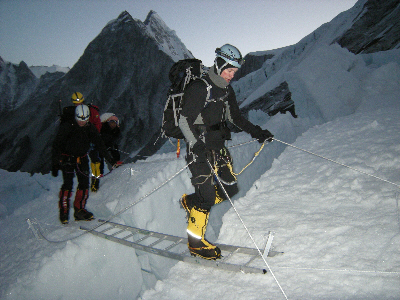
Himalaya Spring 2009 Update: Issues in the Icefall, Summit Push on Manaslu


Time for a late week round up on what is happening in the Himalaya, where throughout the week we've been hearing that there are issues in the Khumbu Icefall near Everest. It was widely reported throughout the week that the route through the icefall, often called the most dangerous part of the mountain, had collapsed, preventing teams from making their way up to the high camps. The route was down for portions of three days in a row, but of course, it was repaired fairly quickly, Ice Doctors doing their usual bang-up job, and access was restored to the mountain once again. This is not an uncommon occurrence in the icefall, where the ice shifts constantly, and seracs collapse with regularity. It can obviously be quite dangerous, but the Docs are consummate professionals, and usually have things repaired ASAP.

For most of the teams, it was another acclimatization week on Everest, with many making their way up to C2 for the first time, where they generally spend the night, and sometimes all the next day as well. The process of getting your body use to that altitude is a slow one, so it is important to spend time there before returning once again to base camp. Alan Arnette conintues to update his Everest 2009 page with some great info of where everyone is at on the mountain, plus his own personal insights into what is going on.

ExWeb is also reporting that the Sherpas have fixed the lines as high as Camp 3, opening the door for the climbers to head on up to that point soon, and continue the acclimatization process. They are also reporting that the Kazakh team working the Lhotse-Everest Traverse, are already at 7300m as they make their alpine style go both summits.

The Himex Team has split into several groups, and are heading back to Lobuje Peak for another acclimatization climb according to Billi Bierling, who will be going for her second successful summit there. Of course, Russell Brice know what he is doing in get his clients ready for the big hill, but not all clients are treated the same, as David Tait, who has climbed with Brice in the past, will skip a second trip up Lobuje, and instead climb to C2 on Everest instead. David already has a successful North to South traverse to his name, and is quite experienced on the mountain.

Meanwhile, other teams are weighing in, with the Peak Freaks updating their blog to indicate that they have team members stretching from BC all the way up to C3 where the Sherpa are fixing ropes. IMG is in a similar position with climbers in BC, C1, and C2. They are also helping to coordinate with other teams on fixing the ropes, making sure everyone is contributing something to the cause. The Adventure Consultants are back in BC on the other hand, having already spent four nights on the mountain, including one night in both C1 and C3. The team is well ahead of the game when it comes to acclimatization and are feeling good at the moment.

On the North Side of Everest, things are still gearing up. The Summit Climb Team reached ABC this week, and there are several other teams strung out between base camp and advanced base camp, with an interim camp in between. ExWeb is also reporting that the Canadian team led by Manuel Pizarro have elected to go for a permit to climb from the Tibetan side of the mountain, rather than their planned South Col route. They are en route to North Base Camp, and hope to be there early next week.

Moving away from Everest and to some of the other peaks, it looks like it is go time on Manaslu, where teams are in the midst of a summit push at this very moment. There is reportedly a lot of snow on the mountain, and that is making things treacherous, but despite those conditions, teams hope to top out on Monday.

Meanwhile, over on Annapurna, the weather conditions are forcing teams to abandon the mountain altogether. There is a lot of snow on the upper slopes, and Annapurna is notoriously dangerous when it is prone to avalanches. Base camp is reportedly nearly empty already.

On Dhaulagiri, the Polish Tatra Rescuers Expedition has already made a run up to C3 and are currently back in base camp, resting, and waiting for a weather window to make a go at the summit. ExWeb also reports that sadly, Peter Hamor has returned to Kathmandu and is filling out reports on climbing partner and friend Piotr Morawski, who died on the mountain a few weeks back.

Finally, Ben Clark posts a dispatch on the Ski The Himalayas website with an update on their progress. He, along with friends Josh Butson and Jonathan Miller, have their hopes set on as summit, and ski descent of 23,390 foot Baruntse. The team is still two days away from BC, but it has already been quite an adventure, with plenty of rain and snow so far. Ben notes that yesterday alone they had to traverse three 14,000 foot passes, in whiteout conditions no less. The best part is that all of that hasn't dampened Ben's enthusiasm for the adventure at all, and just reading his words you can tell how excited he is to be back in the Himilaya. We should all be so lucky.

Thứ Bảy, 9 tháng 4, 2016

Christian Werner | Chained In Paradise


Mental sickness, lack of psychiatric hospitals and traditional healers...all come together in a compelling and disturbing documentary on the mentally sick who are chained, caged or tied up by their families,  on the "paradise" island of Bali.

As is common with other nations of the world, Indonesia is unable to provide adequate mental health facilities to those who are in dire need of them, and it's reported that there are 40,000 Indonesians who are afflicted with mental illnesses, and are treated inhumanly. In Bali alone, it's reported that there are 350 cases who are chained like animals...for fear they will wander off, or that they'll hurt someone or themselves. The Balinese call them "pasung"... or "in chains" and consider them to have been 'punished' by the gods..

With the lack of mental health facilities, families refer those mentally sick to traditional healers; the balians, as they're called, number about 8,000 in Bali. There are about four times as many balians as doctors. The balians are traditional healers who play an important part in Bali’s culture by treating physical and mental illness, removing spells and channeling information from the ancestors.

I photographed balians during one of my photo expeditions in Bali, and found them to be a mix of witch doctors and chiropractors, mixing mumbo-jumbo with massage and manipulation. Most of those I've seen had waiting rooms with many patients.

Chained in Paradise still photographs can be viewed on Christian Werner website.

Christian Werner is a freelance multimedia/photojournalist based in Nordstemmen, Germany. H graduated from the photojournalism & documentary photography course at the University of Applied Sciences in Hannover. His interests are social diversity and global political issues. He worked in various countries in Asia, Africa, Eastern Europe and South America, and he's represented by the agency Laif.

Thứ Bảy, 2 tháng 4, 2016

Ha Noi | Report 9 | The People of Tay Bac

Photo © Tewfic El-Sawy-All Rights Reserved
The group's morning assignment was ostensibly a simple one; during a single photo shoot, and in 15-20 photographs, show Hanoi's teeming life in its streets.

However, the assignment was to be in monochrome. Not as simple as initially thought, eh? Especially with Ha Noi's Old Quarter vivid colors and textures, and particularly galling because of the wondrous light that appeared after every thundershower.

The other objective of the assignment was to encourage the participants to see and capture  "layers"...the fundamental attribute to successful street photography...and to record ambient street noise/sound to accompany the photographs. It was up to them whether to shoot from the hip or otherwise.

I chose to feature the above photograph in monochrome and color...to provide a contrasting view of the same image, and leave it to the viewers as to which they prefer. Both have different aesthetic merits, and both are faithful in their depiction to what I saw. The photograph was made by shooting from the hip so as not to disturb the woman.

By the way, she is playing Candy Crush on her Apple iPad.