Thứ Sáu, 20 tháng 5, 2016
Thứ Tư, 11 tháng 5, 2016
Eugeni Gay Marin | Vietnam
![]() |
| Photo © Eugeni Gay Marin- All Rights Reserved |
To my mind, this is a Vietnamese fado scene; the Portuguese music genre characterized by mournful tunes and lyrics.
Eugeni Gay Marin's Vietnam gallery has a few more of his photographs in this lovely country, but unfortunately too few.
However, his photographic project of documenting Punjabi Sikhs is also very interesting, and I've enjoyed viewing it, especially as I haven't had the opportunity of visiting Amritsar or Harmandir Sahib (the Golden Temple) yet.
Eugeni Gay Marín is a Spanish photographer whose images were published in various media such as El País Semanal and Lonely Planet. He participated in two collective books and has been selected to show his work in several festivals. He co-founded El Observatrio project, specialized in monitoring photographic student work and in 2014 he began Fotoholica, a digital retouching company for photographers. In 2014 he won the photography FNAC New Talent in Spain for the work “From Quantum Island”. This project was exposed in the Voices Off festival in Arles and won the “Le prix Révèlation SAIF 2014”.
The Travel Photographer's 2014 Most Popular Posts
In first place on The Travel Photographer blog during 2014 was POV: The 'Unbearable' Lightness of Fuji X Series in which I explain my decision to leave my heavyweight DSLRs home, and travel to Vietnam with just a Leica M9 and the Fuji X Pro-1. It was first photo expedition-workshop that saw me DSLR-less.
In second place, another POV post with Fuji X-T1 Goes To Vietnam in which I describe my experience with the Fuji X-T1 and how it performs while I was traveling and leading a photo group for almost three weeks. Not only did it perform very well, but I didn't miss my Canon equipment.
In third place is the post titled Leica M9 vs Fuji X Pro1 | New York's Chinatown, in which I compared photographs made with these two cameras during New York's Chinatown Parade. The main thrust of the post is to compare virtually identical photographs made with a Leica was coupled with an Elmarit 28mm f2.8, while the Fuji X Pro1 was coupled with a Fujinon 18mm f2.0.
In fourth place is the post titled Verdict | The People of Tây Bắc Photo Expedition; a lengthy and detailed review of what worked and what didn't during that particular photo expedtion-workshop. I graded it (perhaps too harshly) as a B. Members of the group thought I was too harsh, and perhaps I was...but while the travel logistics were flawless to a large degree, there were a few negatives out of my control that affected the trip.
Rather surprisingly I thought, the fifth place most popular post is about the Zeiss Touit 12mm | Fuiji X-Pro 1, in which I explain I had decided to buy a Zeiss 12mm f2.8 Touit. My reasons were that it was a solid, all glass lens that felt well made, and while it's manufactured in Japan (as if that is a downside), it feels 'German Zeiss'. And it's hand-built.
Most of my blog's most popular posts relate to cameras and lenses...ie gear. Hardly surprisng since photographers, whether travel or otherwise, are primarily interested in opinions and points of view about gear.
Thứ Hai, 9 tháng 5, 2016
John Rowe | The Donga
![]() |
| Photo © John Rowe-All Rights Reserved |
For a complete change of pace, here's an Ethiopian feature.
The Donga (also called Saginay) is the stick-fight practiced by the Suri, a tribe in the Omo Valley. The Suri adopt stick fighting - which is a traditional way for young men to impress girls. The often bloody fight is a demonstration of bravery, and underscores the men's desire to become cattle warriors.
Generally, stick fighting is practiced so young men can find wives. The ideal time to stick fight is just after it rains, and involves various Suri villages. With 20 to 30 people on each side, the stick fights can be extremely dangerous despite having referees to make sure that rules are followed. It's said that the fights have recently led to fights with guns, in which people have been wounded.
Sometimes when a young man has a dispute over a woman, he challenges his rival to a stick fight. His village joins him by starting the age-old ritual by singing, and carrying their fighting sticks that are carved in the shapes of penises (of course).
The Donga is a gallery of incredibly compelling monochrome photographs of this ritualistic fight by photographer John Rowe.
John Rowe is a photographer and film maker who first trained at the US Navy School of Photography when he was 18 years old. He's also a successful businessman who has founded and managed companies which develop software and digital media for the entertainment industry.
He has also devoted a tremendous amount of time, energy and financial assistance to humanitarian work in Africa. He is also helping to save babies born in the Omo Valley from the brutal tradition of Mingi. Mingi is a tradition practiced for many generations by tribes of the Omo Valley like the Kara, labels certain children as “cursed.”
For more on John's efforts on this worthwhile cause, drop by PetaPixel's post on the subject.
He has also devoted a tremendous amount of time, energy and financial assistance to humanitarian work in Africa. He is also helping to save babies born in the Omo Valley from the brutal tradition of Mingi. Mingi is a tradition practiced for many generations by tribes of the Omo Valley like the Kara, labels certain children as “cursed.”
For more on John's efforts on this worthwhile cause, drop by PetaPixel's post on the subject.
Thứ Hai, 2 tháng 5, 2016
Saigon - Ho Chi Minh city
While it may not be the capital of Vietnam politically, you just need to invest a brief time in Saigon to perceive how it the pace of progress in the south is forming the nation. The biggest city in the nation, with in excess of 6 million tenants (and in excess of 8 on the off chance that you tally brief occupants), Saigon is a packed, quick, uproarious, and overpowering spot at the outset. Burrow a little deeper, however, and you'll discover there is a vitality and dynamic quality to the city that can be extremely irresistible.
| Duc Ba Church |
Overflowing with life, Ho Chi Minh City (HCMC or Saigon as the greater part of its occupants still call it) offers an extraordinary arrangement for voyagers and exiles apparently equivalent. There's an incredible arrangement to see and do, and no lack of tasty treats to consume, whether at top restaurants or just as delectable road stalls for a few dollars.
The pace of progress in the city is amazing - regularly structures are pulled down so more up to date, shinier ones can be raised in their spot. In around ten years the city went from a city of 3,000,000 bikes to 5,000,000 motorbikes, heading the Saigon's exceptionally one of a kind brand of movement. Presently auto use is on the ascent gridlock undermines to set in, however it is yet an alternate indication of how quick lives are changing in HCMC, and how more individuals are functioning out of destitution.
Yet with a more critical look you can discover excellent old structures and also striking new ones, cool, smooth bistros with enclosures that are situated back from the street to provide for you a minutes rest from the frenzy outside, unwinding spas and cool pools to swim in.
| Saigon river |
There's additionally various extraordinary day treks that is possible from the site, whether to Tay Ninh mountain and the Cao Dai sanctuaries in the North West, the renowned Cu Chi Tunnels where the safety propelled sneak assaults on the US drives situated in Saigon, vessel excursions to Vung Tau, the Mekong Delta or to Can Gio, the gigantic range of mangrove marshes to the south, known as 'the lungs of the city'.
Thứ Tư, 27 tháng 4, 2016
Shop till you drop, and feel good about it - VietNam Travel
It began with a modest fired teapot and that prompted a lacquered bamboo dish in a brilliant conceptual example, then a hand-woven scarf. It was simply the begin of my voyage through Vietnam, and I was at that point snared.
I am not generally a shopaholic, yet here not just did the costs speak to my Yorkshire sensibilities – nothing unless there are other options things cost more than £2 – however I could persuade myself that this retail treatment was doing some great. There's numerous types of tat on special to sightseers in Vietnam, much of it made in China. Anyhow I knew my using would have any kind of effect to neighborhood lives in light of the fact that I was on vacation with an association which makes that its mission.
Traidcraft, the individuals behind the British inventories and blessing shops, has collaborated with cycling-occasion administrator Saddle Skedaddle (one of its organizers used to work for Traidcraft) to offer treks to the creating nations the philanthropy sources its products from. The thought of Traidcraft's "Meet the People" occasions (there's no cycling on this specific excursion) was to give individuals who were at that point a piece of the reasonable exchange development – volunteering in shops, running stalls – the opportunity to see where items began.
Actually for those who've never been close to a reasonably exchanged soil grown foods bowl, the visits offer a special viewpoint, on individuals and societies and touring. (They likewise run outings in other Asian nations, and in Africa and Latin America.) Plus you get to shop till you drop, and like it.
My teapot and dish originated from a showroom in Hanoi run by Craft Link, a non-benefit association that works with 60 artisan aggregates in northern Vietnam. Over tea and little cakes upstairs, we got notification from administrator Ms Tran and more youthful Ms Thuy about its work discovering markets for crafted works as a method for keeping customs alive and assuaging neediness. It's not philanthropy: they help bunches for several years, with preparing and monetary backing. Also they generally work with ladies.
At that point we were let detached in the shop: our gathering of 15 Brits gobbled up silk satchels and scarves, sacks, ceramics and gems. There was still more than two weeks of the visit left, yet hey, a flawless little clasp won't consume up much space.
Following day, talking on the transport as we cleared out Hanoi for an outing heartland, Ms Thuy let me know she's proudest of the impact Craft Link has on the part of town ladies. Consider, she said, your normal Vietnamese agriculturist: he's been reveled from early stages (while his sisters buckled down) and graduates to the nearby diversions of wife-beating and drinking rice wine. Despite the fact that money salary is just about $100 a year, there's bounty to consume, from the chickens, fishpond, rice paddies and vegetable arrangement. At that point the wife finds out about these city individuals who'll pay great cash for her weaving. What's more quickly she's using her days sewing in a chipper gathering with her companions, as opposed to weeding the paddies and rubbing his feet. Furthermore he can't gripe, on the grounds that she accumulated almost $400 a year ago: its paid for a TV, and he's trusting for a motorbike.
Ms Thuy once asked a hilltribe lady what had changed since she began offering painstaking work. "Presently I can grin," she said, uncovering a column of pretty teeth. Her teeth had spoiled when she was in her 20s, however her art cash had paid for a set of crowns.
Our terminus was the Mai Chau valley – home to ethnic minority White Thai individuals – however we halted first at Ha Thai town, which represents considerable authority in lacquered bamboo. A family bunch in one workshop were finishing a US request for 3,000 bowls with an exquisite painted stripe – they get 30% of the last cost. We viewed the age-old methodology of part bamboo, bowing it, snaking it round a mold then sanding it before applying 15 layers of (nourishment safe) cashew-nut finish. Up the road, men and ladies were utilizing globules and coconut shells to make beautiful adornments – ooh, yes, my little girl will like that bangle, with its white-on-dark example.
Some in our gathering perceived these items from Traidcraft outlets back home and could discuss how well, say, a specific vase offers. That was what made this trek distinctive: we were in small towns vacationers would never regularly see, not as outsiders, yet as a feature of the exertion to bring flourishing to these groups. (All the more motivation to take home one of those really shaded trays, as well.)
The area of Mai Chau, 100km from Hanoi, is exemplary rustic Vietnam: rice paddies extending level as a green fitted rug to a ring of rugged mountains, with tapered caps and water bison spotting the fields. This is the place a considerable measure of Craft Link's materials are made. A companion's approaching birthday came up with a decent rationalization to get a delicate scarf in quieted green and red. One weaving machine on the edge of the town was being worked by an adolescent and ambitious incapacitated lady: as we passed she gave pursue in her wheelchair with a determination of her products
Thứ Sáu, 15 tháng 4, 2016
Jon Bowermaster is off to Madagascar

Speaking of Jon Bowermaster, when last we checked in with him, he was in the Maldives, investigating the impact of rising sea levels on that nation's future. He has since moved on to the Seychelles Islands, where he discovered that pirates have become a very real threat.
His journey across the Indian Ocean wasn't done there however, as he has proceed on to Madagascar, an already poor country that has been hit hard by the global economic recession, and is now struggling with a great deal of political unrest as well. Tourism has been a boon for the island nation for a number of years, and two recent animated films have actually helped that industry. But in this economic environment, many people are not traveling, and with the unrest in Madagascar leading to riots in recent month, those that are venturing abroad, have elected to avoid the country for the most part.
It seems Jon's tour of the region won't end here either, as judging from this map, he'll next be moving on to the Comoros Islands, a small island nation with a rich and diverse history. From there, it's on Mozambique before proceeding north to Tanzania. This trip makes my little foray into the Amazon seem like I was just dipping my toe in the water!
Be sure to check back with Jon's blog regularly. His updates are always insightful and interesting, and I almost always learn something new about the places he visits. They also almost always wish I was tagging along too!
Thứ Năm, 14 tháng 4, 2016
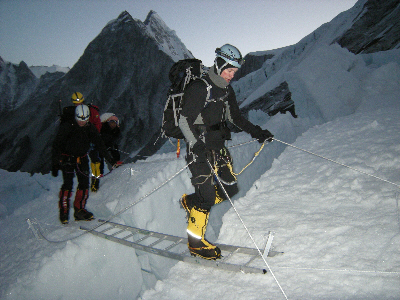
Himalaya Spring 2009 Update: Issues in the Icefall, Summit Push on Manaslu

Time for a late week round up on what is happening in the Himalaya, where throughout the week we've been hearing that there are issues in the Khumbu Icefall near Everest. It was widely reported throughout the week that the route through the icefall, often called the most dangerous part of the mountain, had collapsed, preventing teams from making their way up to the high camps. The route was down for portions of three days in a row, but of course, it was repaired fairly quickly, Ice Doctors doing their usual bang-up job, and access was restored to the mountain once again. This is not an uncommon occurrence in the icefall, where the ice shifts constantly, and seracs collapse with regularity. It can obviously be quite dangerous, but the Docs are consummate professionals, and usually have things repaired ASAP.
For most of the teams, it was another acclimatization week on Everest, with many making their way up to C2 for the first time, where they generally spend the night, and sometimes all the next day as well. The process of getting your body use to that altitude is a slow one, so it is important to spend time there before returning once again to base camp. Alan Arnette conintues to update his Everest 2009 page with some great info of where everyone is at on the mountain, plus his own personal insights into what is going on.
ExWeb is also reporting that the Sherpas have fixed the lines as high as Camp 3, opening the door for the climbers to head on up to that point soon, and continue the acclimatization process. They are also reporting that the Kazakh team working the Lhotse-Everest Traverse, are already at 7300m as they make their alpine style go both summits.
The Himex Team has split into several groups, and are heading back to Lobuje Peak for another acclimatization climb according to Billi Bierling, who will be going for her second successful summit there. Of course, Russell Brice know what he is doing in get his clients ready for the big hill, but not all clients are treated the same, as David Tait, who has climbed with Brice in the past, will skip a second trip up Lobuje, and instead climb to C2 on Everest instead. David already has a successful North to South traverse to his name, and is quite experienced on the mountain.
Meanwhile, other teams are weighing in, with the Peak Freaks updating their blog to indicate that they have team members stretching from BC all the way up to C3 where the Sherpa are fixing ropes. IMG is in a similar position with climbers in BC, C1, and C2. They are also helping to coordinate with other teams on fixing the ropes, making sure everyone is contributing something to the cause. The Adventure Consultants are back in BC on the other hand, having already spent four nights on the mountain, including one night in both C1 and C3. The team is well ahead of the game when it comes to acclimatization and are feeling good at the moment.
On the North Side of Everest, things are still gearing up. The Summit Climb Team reached ABC this week, and there are several other teams strung out between base camp and advanced base camp, with an interim camp in between. ExWeb is also reporting that the Canadian team led by Manuel Pizarro have elected to go for a permit to climb from the Tibetan side of the mountain, rather than their planned South Col route. They are en route to North Base Camp, and hope to be there early next week.
Moving away from Everest and to some of the other peaks, it looks like it is go time on Manaslu, where teams are in the midst of a summit push at this very moment. There is reportedly a lot of snow on the mountain, and that is making things treacherous, but despite those conditions, teams hope to top out on Monday.
Meanwhile, over on Annapurna, the weather conditions are forcing teams to abandon the mountain altogether. There is a lot of snow on the upper slopes, and Annapurna is notoriously dangerous when it is prone to avalanches. Base camp is reportedly nearly empty already.
On Dhaulagiri, the Polish Tatra Rescuers Expedition has already made a run up to C3 and are currently back in base camp, resting, and waiting for a weather window to make a go at the summit. ExWeb also reports that sadly, Peter Hamor has returned to Kathmandu and is filling out reports on climbing partner and friend Piotr Morawski, who died on the mountain a few weeks back.
Finally, Ben Clark posts a dispatch on the Ski The Himalayas website with an update on their progress. He, along with friends Josh Butson and Jonathan Miller, have their hopes set on as summit, and ski descent of 23,390 foot Baruntse. The team is still two days away from BC, but it has already been quite an adventure, with plenty of rain and snow so far. Ben notes that yesterday alone they had to traverse three 14,000 foot passes, in whiteout conditions no less. The best part is that all of that hasn't dampened Ben's enthusiasm for the adventure at all, and just reading his words you can tell how excited he is to be back in the Himilaya. We should all be so lucky.
Thứ Bảy, 9 tháng 4, 2016
Christian Werner | Chained In Paradise
Mental sickness, lack of psychiatric hospitals and traditional healers...all come together in a compelling and disturbing documentary on the mentally sick who are chained, caged or tied up by their families, on the "paradise" island of Bali.
As is common with other nations of the world, Indonesia is unable to provide adequate mental health facilities to those who are in dire need of them, and it's reported that there are 40,000 Indonesians who are afflicted with mental illnesses, and are treated inhumanly. In Bali alone, it's reported that there are 350 cases who are chained like animals...for fear they will wander off, or that they'll hurt someone or themselves. The Balinese call them "pasung"... or "in chains" and consider them to have been 'punished' by the gods..
With the lack of mental health facilities, families refer those mentally sick to traditional healers; the balians, as they're called, number about 8,000 in Bali. There are about four times as many balians as doctors. The balians are traditional healers who play an important part in Bali’s culture by treating physical and mental illness, removing spells and channeling information from the ancestors.
I photographed balians during one of my photo expeditions in Bali, and found them to be a mix of witch doctors and chiropractors, mixing mumbo-jumbo with massage and manipulation. Most of those I've seen had waiting rooms with many patients.
Chained in Paradise still photographs can be viewed on Christian Werner website.
Christian Werner is a freelance multimedia/photojournalist based in Nordstemmen, Germany. H graduated from the photojournalism & documentary photography course at the University of Applied Sciences in Hannover. His interests are social diversity and global political issues. He worked in various countries in Asia, Africa, Eastern Europe and South America, and he's represented by the agency Laif.
Thứ Bảy, 2 tháng 4, 2016
Ha Noi | Report 9 | The People of Tay Bac
| Photo © Tewfic El-Sawy-All Rights Reserved |
![]() |
| Photo © Tewfic El-Sawy-All Rights Reserved |
However, the assignment was to be in monochrome. Not as simple as initially thought, eh? Especially with Ha Noi's Old Quarter vivid colors and textures, and particularly galling because of the wondrous light that appeared after every thundershower.
The other objective of the assignment was to encourage the participants to see and capture "layers"...the fundamental attribute to successful street photography...and to record ambient street noise/sound to accompany the photographs. It was up to them whether to shoot from the hip or otherwise.
I chose to feature the above photograph in monochrome and color...to provide a contrasting view of the same image, and leave it to the viewers as to which they prefer. Both have different aesthetic merits, and both are faithful in their depiction to what I saw. The photograph was made by shooting from the hip so as not to disturb the woman.
By the way, she is playing Candy Crush on her Apple iPad.
Thứ Hai, 28 tháng 3, 2016
Vietnam Natural Discovery
Length of time: 7 days 6 nights
This 7 day visit is intended for the individuals who need to overwhelm in nature and valid Vietnamese custom. Begin from a serene uneven town, we will find the excellence of low patio paddy fields, delight in pit fire with customary move in a stilt house, a rafting enterprise along Xia River, drifting along intriguing landscape of Trang A cave...
Land in Hanoi you will be met and exchanged from the airplane terminal to your inn in Hanoi Old quarter. Rest of your day will be free for your investigation to Hanoi capital. Overnight in Hanoi.
![]() |
| Vietnam Natural Discovery - Cat Ba Island |
Delight in the ride through the paddy fields of the Old Doai town and road side town markets. Take a stop at Thung Khe Pass to watch the scene of the valleys and slopes.
11 am: Arrive in Mai Hich and be welcomed by the town has in conventional dresses with icy beverages at Minh Tho Homestay.
Have a home-cooked neighborhood lunch with woods fortes and new fixings.
Evening: Cycle or stroll around the towns to appreciate the magnificence of the encompassing nature and country exercises in activity, including houses-on-stilt, fish lakes, low patio paddy fields, et cetera. Tune in a percentage of the day by day cultivating schedules of nearby agriculturists. Look at a customary weaving agreeable and have an opportunity to purchase some hand-made trinkets for your friends and family.
18:30 pm: Have supper while appreciating the music and moves of Thai youth. Have an opportunity to learn and join the moves, and taste some nearby alcoholic forte a while later.
Have an agreeable overnight rest at Minh Tho Homestay (with security, snuggled up, and complimentary wireless internet access)
Discretionary: Campfire with simmered corn, sweet potatoes or chicken porridge
Awakening the crisp and quiet morning of Tay Bac hilly zone!
7 - 8 am: Buffet breakfast in the setting of nearby Thai market
![]() |
| Vietnam Natural Discovery - Trang An |
Alternative 1:
Go out for a stroll through the corn fields, paddy fields and appreciate the day by day life of the neighborhood group. Delight in a rafting endeavor along Xia River
Pack up and get ready to leave Mai Hich, withdraw Mai Hich to visit a customary art focus worked by the physically tested craftsmen in Lac Village. Attempt on customary outfits and shop for keepsakes in Lac Village.
Eat at Quan Hang Homestay in Lac Village before drive to Ninh Binh
Choice 2:
Trek through the towns, bamboo woodlands, visit a neighborhood block manufacturing plant, visit Thai, Mai Ha, Chieng Chau towns on the path from Mai Hich to Lac Village.
Have some gift shopping time at the middle of Lac Village.
9:00am leave the inn for Hoa Lu Ancient Capital. In 968, Dinh Bo Linh pronounced himself as the King. From that point forward Hoa Lu existed as the capital for the following 41 years (968 – 1009), of which 12 years was under the Dinh tradition – King Dinh Tien Hoang, the nation named Dai Co Viet, and after 29 years was under the Le administration – King Le Dai Hanh. Hoa Lu turned into the old stronghold. In Hoa Lu there are presently 2 sanctuaries have been based on the ground of the old regal castle, one is devoted to King Dinh Tien Hoang, the other is to King Le Dai Hanh. The visit offers an opportunity to know all the more about piece of medieval traditions and recorded periods in Vietnamese history.
A hour for lunch at nearby restaurant with neighborhood nourishment.
After lunch, take the astounding pontoon excursion to visit Trang A grottoes which is a social affair of 31 valleys, 50 cross-water gives in, and home to 600 sorts of vegetation and in excess of 200 sorts of fauna, a large number of them in the Red Book of Vietnam. While paddling through Trang A cavern in the calm, natural quality of the good countries, with just the sound of winged creatures and the paddles blending the agreeable water and encompassed by grand forested mountains whereupon touch white goats, guests delight in a paradise on earth.
Complete exceptional full day trek at your lodging in Hanoi! O/N at your lodging in Hanoi.
8.00: Shuttle transport will get for a drive to Halong Bay.
Welcome beverage is served.
Meander around the maze of the Bay through the Fighting Cock, Canh Buom, and stop for swimming then try for going to Sung Sot buckle (The Sudden Surprise). Kayak to Luon hole, Dau Nguoi Mountain, Titop shoreline.
08-09.30: Buffet breakfast while cruising over to Halong wharf and visit Fire Island, Dinh Huong Island, gliding town.
10.30: Luggage hauls out. Eat.
11.30: Arrive at the wharf.
12.00: Shuttle transport will take you over to Hanoi. Supper on visitor's record.
Overnight in Hanoi
Day 7: Hanoi takeoff (B)
Free at recreation until our auto and aide lift you up and exchange to the airplane terminal for flight.
Trust you have extraordinary time in Vietnam. See you next excursion.
On the off chance that you need to extend your vacation in Vietnam, Laos and Cambodia, we'd like to hel
VietNam Discovery tour 14 day
Investigate Vietnam on an inside and out trip that takes you from North to South. Begin with the pilgrim appeal of Vietnam's capital, Hanoi, then fly out to the characteristic wonderland of Halong Bay and trek through Sapa's terraced rice paddies and slope tribe towns. Visit the antiquated capital Hue and lounge on the shorelines of Hoian. Investigate the lavish scene of the Mekong Delta and the brilliant lights and urban clamor of Saigon. This visit takes you profound into our lovely nation, submerging you in our rich society and exquisite scenes.
Welcome to Hanoi, Vietnam's clamoring frontier capital. Your driver and aide will reach you outside the stuff case of Noi Bai Airport and take you to your inn in the downtown area. Toward the evening, delight in an introduction walk, going to Hanoi's principle attractions: the Opera House, Old Quarter, Hoan Kiem Lake and Ngoc Son Temple. At night, relish a welcome supper of real Vietnamese nourishment at one of Hanoi's finest restaurants.
Today you have a full day to investigate Vietnam's beguiling capital. With its wide tree-lined lanes, French pilgrim building design, quiet lakes and antiquated oriental pagodas, Hanoi is a diverse blend that offers something for everybody. Your city visit will take you to Hanoi's key locales: the Ho Chi Minh Complex (Ho Chi Minh's Mausoleum and stilt house), the close-by One Pillar Pagoda; the Presidential Palace; the Temple of Literature; the Quan Thanh Temple, the steady Tran Quoc Pagoda & West Lake; and one of the city's galleries (a decision between the History Museum and the Ethnology Museum). At night appreciate a customary Water Puppet Performance – an one of a kind Vietnamese Art structure hailing from Southeast Asia's wet-rice society – before heading to the train station to get your night train to Laocai.
The train lands at the Laocai track station in the early morning. Your aide and driver will reach you there and tackle the 40km drive to Sapa – Northwest Vietnam's chief travel end. Delight in breakfast at the inn then get a couple of hours of rest before starting your enterprise in this excellent mountain scene and home to numerous minority slope tribe people groups. In the late morning, your aide will tackle a two hour trek through the terraced rice fields to visit the towns Cat and Sin Chai, where you will look into neighborhood customs and day by day life. Rest of the day, you are free at recreation or investigate the town all alone.
Revel in breakfast at the inn, before setting out on a full day's trek to investigate Sapa's social differing qualities and frequenting characteristic excellence. Take a guided climb through yawning valleys enriched with terraced rice fields and pass through remote slope tribe towns. You have three trekking choices to browse: Soft trek (~ 3 km), medium trek (~ 6km) and long trek (~ 12km). Trekking is an amazing approach to investigate the day by day life and acquaint yourself with the societies of the H'mong, Dzao and Dzay individuals who populate the locale. Eat at a slope tribe town then drive over to Laocai to get your return night train to Hanoi.
Land in Hanoi in the early morning. Your aide and driver will reach you at the tracks station and take you to a nearby restaurant for breakfast, before setting out on a 3 to 4 hour drive to the UNESCO World Heritage Site: Halong Bay. Use 24 hours on a conventional Junk Cruise in the astounding sound: a common wonderland made out of bulging limestone islands and shimmering turquoise waters. Touch base at the dock around twelve and board your garbage. Appreciate a gourmet lunch of crisp fish locally available as we cruise out into the enchanted straight. Toward the evening, voyage around some of Halong's numerous islands, including Dinh Huong and Ga Choi. Along the way visit one of the inlet's 3 biggest hollows (Thien Cung, Dau Go or Sung Sot). Stop at an island bay with a shielded white-sand shoreline and take a plunge in the warm waters of the Tonkin Gulf (climate allowing). Pass the night on your garbage, hushed to rest by the tender shaking of quiet waters.
Wakeful early and partake in Tai Chi on the top deck or essentially unwind and appreciate the first light over the sound's towering islands. Appreciate a morning container of espresso or tea, before embarking to investigate close-by islands by skiff. Come back to the garbage for breakfast then exploit the sundeck and respect the astonishing rock establishments of Bai Tu Long Bay as we explore once more to Halong City. Have brunch ready for pontoon before coming back to Halong wharf. Your driver will reach you at the dock and take you to Noi Bai Airport of Hanoi for your in-nation flight to Hue. Upon entry, your aide and driver will reach you and take you to your inn.
Use a whole day visiting the Vietnam's previous aged capital. Begin the day with a visit to the Imperial Citadel, home to the Imperial City and Forbidden Purple City – once the Emperor's private habitation. The Imperial City was made in the nineteenth century and displayed on the Forbidden City in Beijing. The Imperial Enclosure houses numerous royal residences and sanctuaries inside its dividers. Toward the evening, proceed your visit halting at the Imperial Museum, Tu Hieu Pagoda and dynamic Dong Ba riverside market.
Thứ Năm, 24 tháng 3, 2016
Ha Noi | Report 11 | The People of Tay Bac
![]() |
| Photo © Tewfic El-Sawy-All Rights Reserved |
The People of Tay Bac Photo Expedition ended at breakfast this morning (Ha Noi time), where it has become noticeably cooler and less humid.
Seizing on the opportunity to shoot in the streets without exuding a ton of sweat, I worked the small streets of Hanoi and its tiny alleys, where impromptu small pho establishments suddenly appear out of nowhere. I've been encouraging the group to look for layers in their street photographs, and I practiced what I taught.
Ha Noi's Old Quarter is rife with such opportunities, but one has to pick an interesting spot and wait...or lucky enough to stumble on one or more of such scenes. I normally shoot from the hip in such instances; not because I don't want to appear sneaky but because I don't want the subjects to freeze, or wave, or proffer the V sign that's very popular in Asia.
Mostly working with my new Fuji X-T1, (and occasionally with a Leica M9), during the past couple of weeks convinced me that the era of DSLRs for me is over. The X-T1's capabilities, performance, ergonomics as well as image quality, are very impressive. It has a few quirks and irritants, but these are easily either ignored or worked around.
In a few days, I'll write up a review about the Fuji X-T1, and feature it here on this blog.
Thứ Tư, 23 tháng 3, 2016
Images From The Amazon
I haven't written too much about my trip to the Amazon yet. I'm still working out the details on the book deal. ;) Just kidding! But expect stories on the trip to be appearing on Gadling in the very near future, and I'll post links here when they go online.
I did, however, want to share some of my photos, and my first video from the Amazon. You can checkout 100 or so images from the trip in my Amazon 2009 Gallery. Overall, I'm fairly happy with the way the photos turned out, although I battled a number of issues with my camera while on the trip. First, the humidity made it difficult to keep the lenses dry and clear at times, and on top of that, I had a failure of the autofocus engine on my telephoto lens, rendering it in manual focus mode only. That isn't necessarily a terrible thing, unless you're trying to capture shots of wildlife on the move. Still, all in all, the photos aren't half bad.
One thing I did learn on the trip is that I think I'm beginning to outgrow my DSLR. It is a consumer level model, and when I bought it a few years back, I was aware of the limitations of the model, but didn't think they would matter much to me. As I've learned more about photography however, those limitations have become a bit more evident, and I'm considering moving up to a more capable camera for future trips.
One piece of equipment that I did enjoy however was my handheld HD video camera. This was the first trip I took it on and it worked wonderfully, and captured some great footage. You can see an example of that below in my first video on YouTube. And if you want to watch it in HD, click here.
I hope you enjoy the photos and video. I'll post more in the near future, and stories on my Amazon adventure will be coming soon. :)
Thứ Năm, 17 tháng 3, 2016
Welcome to Vietnam’s bustling - Tour HoChiMinh - HaLong Bay
Maybe there is no preferred time to visit Vietnam over now – where the guiltlessness of its kin stays unspoiled by modernization, where crude excellence can in any case be seen steps far from extravagance solace, where the yearning to strive is felt in every beat of life, in each one movement of contact, where your knowledge of Vietnam is not what is seen by the eye, however how its felt by the heart, where extravagance travel can be characterized at its most astounding standard…
Welcome to Vietnam's clamoring, lively and money related center: Ho Chi Minh City, in the past Saigon. Upon landing in Tan Son Nhat International Airport, meet your visit guide and driver then get exchange to your inn in the downtown area. Revel in whatever is left of the day at your recreation to recuperate from plane slack and investigate the city all alone. At night, relish a welcome supper at the Award Winning Mandarin Restaurant.
Early today, you visit the War Remnants Museum, look into Vietnam's late history at Reunification Palace, visit the close-by neo-Romanesque Notre Dame Cathedral and the City's Center Post Office before passing by the fancy Opera Theater and the City Hall. Wind up at the Ben Thanh Market, where merchants show an immeasurable cluster of merchandise and crafted works, speaking to each taste.
The Cu Chi Tunnels are an underground maze of ways, utilized by the Viet Cong amid the Vietnam War (or "American War" as its alluded to here) as security against American air attacks. Those slanted are welcome to slither through determinations of the passages to better comprehend what life was similar to for the Vietnamese officers amid wartime.
Today you go to the Mekong River Delta on a day outing to investigate the rich society and lavish fluvial scene. After breakfast, your aide & driver will reach you at your inn and take you to Cai Be. Board on your private sampan to visit Cai Be's vivid skimming business sector, passing by a wonderful church. Continue to nearby cabin businesses, home industrial facilities to perceive how rice glue, rice treats and coconut confections are made, alongside the longan apples and oranges drying procedure and a journey to the evergreen islands amidst the wandering waterways. Revel in a heavenly lunch served at an Indochine Villa in the cool shade of products of the soil plantations. Walk lackadaisical couples of minutes to Ba Bon Bridge where your driver will lift you up to exchange once again to Saigon.
You are free until the midday when your driver exchanges you to the air terminal for a northwards flight to the shoreline city of Nhatrang. Register with the Evason Ana Mandara Resort, arranged on an excellent stretch of shoreline and gloating in excess of 20,000 square meters of tropical enclosures neglecting the ocean, one of Vietnam's most attractive coastline areas. Rest of the day, invest your spare time on the shoreline. You have a decision of indoor, veranda or shoreline eating with a dynamite surrounding perspective of Nhatrang Bay. Advance your day with a liberal universal breakfast smorgasbord and current fine feasting food for an enchanting supper at the resort.
A morning vessel outing on Nhatrang Bay visits a percentage of the adjacent islands where you will have the chance to swim and snorkel in the warm turquoise waters. After a crisp fish lunch, you come back to shore. Toward the evening, investigate Nha Trang at your own particular pace. Don't miss a 90 moment spoiling treatment at the Ana Mandara's impeccable Six Senses Spa, placed close by the shoreline in a coconut manor, sets new benchmarks in spa outline with the utilization of characteristic tones, customary Vietnamese style and water components (Sensory Spa Journey bundle – The Soul of Six Senses).
On entry, your driver will reach you and exchange to The Nam Hai – a brilliant resort set in the midst of the lavish scene of the East Sea. Found along an one kilometer stretch of immaculate white sand shoreline on Vietnam's Central Coast, The Nam Hai offers a rich tropical setting helpful for rest and unwinding.
Submerge yourself in the serenity and appeal of this sluggish riverside town. From the sixteenth to eighteenth hundreds of years Hoian was a flourishing universal port frequented by Chinese, Dutch, French, Japanese, Portuguese and Arab brokers, who came to exchange the brilliant silk still delivered in the locale. Today, Hoian is an unwinding resort prevalent with travelers for its varied structural planning, talented tailors and various bistros. Take a half-day strolling visit through the limited slowing down of the old town focus, going to Chua Ong Pagoda, the Chinese Assembly Hall, the 200-year old Tan Ky familial house and the renowned Japanese Bridge. After lunch, take a short pontoon outing to a close-by island and visit a workmanship town represent considerable authority in pottery. Come back to the inn in the late evening.
A choice of going by Myson – Holy place that is known for lost Champa Kingdom or an Eco-trip to field is accessible, please contact our travel expe
Thứ Ba, 15 tháng 3, 2016
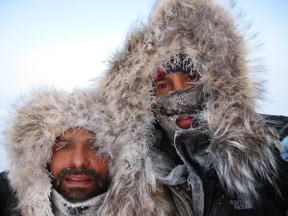
North Pole 2009: Optimism and Frustration

It has been another busy couple of days for the arctic teams, who continue moving forward, with reportedly warmer weather and overall better ice conditions.
The Victorinox North Pole Team consisting of American's John Huston and Tyler Fish, posted another one of their weekly recaps a few days back with insights into the highs and lows of making an expedition to the North Pole. They talk about how excited they were to cross the 84º point last week, having made it in 18 days, right on their pre-expedition schedule. But since then, they feel like they are making slower time and covering less distance than they had hoped. The team felt like once they got passed 84º north they'd see an increase in speed, but that hasn't materialized just yet. They also report that they came across tracks in the snow of a large polar bear and her cubs, but they were moving in the opposite direction, which made them feel a bit better about having the predators in the area.
The Catlin Arctic Survey Team welcomed spring in the Arctic, and are happy to have -24ºC days as opposed to those -40º days (-70º windchills) they had not so long ago. Expedition member Pen Hadow notes that while everyone trains very hard for their journey to the Pole, none of that training can prepare you for the real experience out on the ice, where it is colder, windier, and darker than you expect. Early on in these expeditions it's dark for nearly 24 hours of the day. The team has now been out on the ice for nearly 24 days, and they estimate that they could be out for as much as 70 more, a reality that is just now sinking in, and making them realize how demanding their journey could be.
The Peary Centennial Team is also reportedly making progress and claim that they passed a few pleasant milestones in the past few days as well. For one, they actually say that the sleds are beginning to feel lighter, and not just because their supplies are dwindling. Improved ice conditions have made it easier to pull their gear, and the -10ºF that they first had over the weekend was a 40 degree swing in their favor, making it a more pleasant experience all around out on the ice.
Meanwhile, on Baffin Island, the Baffin Babes have finally dropped another dispatch, reporting a close encounter of their own with a young male polar bear. The bear was heading directly for them at one point, and they readied their flare guns and rifles just in case, but before he strayed too close, the big guy moved off in a different direction looking for something else to eat. The Babes moved forward after that, but were quite cautious for some time. They are more likely to encounter bears on Baffin than teams actually headed north, so they're on alert at all times.
Finally, ExWeb sister site ThePoles.com is reporting that the Russians are now saying that Barneo Station is on track to open in early April, launching "last degree" expeditions from that side of the ice. Supplies have already begun to drop into the area, and a landing strip will be blown out of the ice shortly. Mi-8 "Hind" helicopters have already been sent to the region to look for stable ice on which to begin construction of the base that rises and falls with each Arctic season.
Thứ Hai, 14 tháng 3, 2016
POV: Why Wasn't I Thrilled With Holi? Why No Fuji X Pro1?
![]() |
| Photo © Tewfic El-Sawy- All Rights Reserved |
1. Why wasn't I more thrilled with photographing the Holi festivities in Vrindavan and Mathura?
2. Why haven't I used the Fuji X-Pro1 more often (only an estimated 10% of the time)?
Well, I certainly was excited to photograph Holi, particularly as the pink/fuschia, yellow and neon green powders being thrown in the air, smeared on people's clothes and faces made for compelling color (and possibly monochrome) photography. However, something was missing....and I knew that that something would be missing much before traveling to India.
The large majority of my photo expeditions are event-specific; whether it's to photograph the mind-blowing annual death commemoration of Sufi saint Moin'uddin Chisti in Ajmer, the bloody rituals of Velichapadus in Kerala or large Ngaben (cremations) in Bali. These events are usually religious and spiritual, and masses of people attend them to express their devotion and faith.
The festival of Holi had little evidence of that. Holi is a festival of Spring, of reconciliation, of exuberant fun, to celebrate the advent of a new season. Its religious 'ancestry' has been largely forgotten, and secular festivities have taken it over. While the throwing of colors seem to have some original religious significance, it's now an opportunity to 'frolic' as some of my Indian friends describe it.
Avoiding excessive colored gulal being thrown directly at me prevented from entering in what I call my "deep zone".. This the frame of mind that I get into when I photograph...sort of being sucked into a different dimension where I only see what I want to photograph....a sort of complete immersion. That was generally not possible during Holi. Only for a few moments in the 'mosh pit' of Vrindavan's main temple, Bank Bihari, did I achieve that...oblivious of the chaos around me, and focusing on what I wanted to photograph.
Outside of the Banke Bihari temple's courtyard, where expressions of faith and devotion were aplenty, I saw no religiosity whatsoever...aside from tapestries depicting Krishna and Radha, and devotional songs blaring from roadside shacks.
That's why I wasn't thrilled photographing Holi as much as I was buzzed to photograph the religious events I mention earlier. As I said in an interview, "it's religious rituals and ceremonies that attract me the most for my photographic work because it’s where people are at their most authentic, where there are no artifices and no make-believe. It is at these events that one connects with humanity at its basic denominator, and with the nobility of the human spirit … and it is that that nourishes me, and I try to share that with others."
It's that simple.
As for not using the Fuji X-Pro1 more often. It's a good question. I thought about that, and conculded it was a combination of needing the speed of the DSLRs and their being better sealed. Before traveling, I fashioned a waterproof cover for the X Pro-1 out of a Zip-Lock bag, and while it seemed to be more than adequate, I was reluctant to put it to the test.
It's that simple.
What I do regret very much is that I didn't use my iPhone during Holi...I didn't want to risk it being stolen in the crowds.
Chủ Nhật, 13 tháng 3, 2016
Ocean Rowing Updates: Olly Rows On, Sarah Back on Dry Land
A couple of quick updates today on the two major ongoing ocean rows that I've reported on recently.
First, the big news is about Sarah Outen, who is hoping to become the first woman to row solo across the Indian Ocean. She set off a week or so back from Fremantle, Australia with her sights firmly set on reaching Mauritius, and doing so in record time. She also hoped to become the youngest person to ever achieve the crossing as well.
According to her blog however, that quest will be delayed a bit. It seems that the electrical systems on Sarah's boat went out and she was forced to call for a tow back to land. But fear not, while the boat is being examined, Sarah says she'll restock her supplies, rest up, and prepare to head back out onto the water as soon as she can. She's not quite done yet.
Meanwhile, her fellow countryman, British adventurer Olly Hicks, continues his attempt to circumnavigate Antartica by row boat as part of the Virgin Global Row challenge. After a slow start, that included a week of basically standing still, Olly seems to really be in the groove now, and making solid progress as he rows south and east, to drop below New Zealand before heading out across the South Pacific.
Olly continues to update his daily blog as well, with insights into his day to day life aboard the Flying Carrot. In a recent post he laments the build up of barnacles on his beloved boat, saying they only serve to remind him of how slow he is moving, saying that at times he feels like "little better than drift wood with lights and music!" He's also endured some foggy days of late, which hasn't brightened his mood much, but he seems focused and intent on just taking things one day at a time, happy to be making positive miles.
If everything continues to go as planned, Olly should reach South Georgia around June, where he'll take a break from the water, wait out the winter, and then continue on his way. All told, the expedition is expected to take 18 months to complete.
Thứ Tư, 9 tháng 3, 2016
Philip Montgomery | The Masjid
![]() |
| Photo © Philip Montgomery - All Rights Reserved |
I had planned to feature an Islamic-themed photo essay a few days ago on the occasion of Eid el-Fitr, but I was in Guatemala for the Foundry Photojournalism Workshop, so couldn't find the time to do so.
The Masjid, or the mosque, is the place of worship for Muslims. These places of worship range from the simplest to the most elaborate architectural structures (the most beautiful, in my view, are those in Istanbul and were either built or influenced by the great Ottoman architect Koca Mi'mâr Sinân Âğâ, who was either an Armenian, or a Greek).
The smaller places of worship are technically not mosques, but are called 'mussaleya" or some derivative thereof.
"...a person kneeling towards Mecca is not a stranger, but a brother or sister in faith."The Masjid is the work of Philip Montgomery, and is a photo essay on the places of worships for the
the immigrant Muslim communities within New York City. Philip writes that for these new immigrants, the Masjid acts as an incubator, a neutral space, providing refuge from the outside world.
He found an incredible diversity of cultures and practices; whether in Harlem, Jamaica, Brooklyn or Queens...practices divergent from one origin to the other, whether West African Muslims, Egyptians, Palestinians, Indonesians...all bringing their rituals and characteristics to New York City's melting pot, and keeping their individual traditions intact but united under Islam, despite the slight nuances of each.
Originally from the San Francisco Bay-Area, Philip Montgomery is a freelance photographer based in Brooklyn, New York. He is a graduate of the Photojournalism and Documentary Program at the International Center of Photography and is a recipient of the 2009-2010 ICP Directors Scholarship.
Thứ Ba, 8 tháng 3, 2016
Roy Del Vecchio | Viet Nam
![]() |
| Photo © Roy Del Vecchio-All Rights Reserved |
And how else to bring it to the fore than featuring Roy Del Vecchio's Vietnam gallery?
Roy is photographer, editor and goldsmith from Amsterdam. He prefers to travel to various countries in Asia, and has extensive galleries of India, Burma, Morocco, Indonesia, Laos, Cambodia and Hong Kong. He also maintains a blog, with some lovely Hipstamatic shots of Delhi's Lodi Gardens and Humayun's Tomb (scroll to the bottom).
His photographs have appreared in Lonely Planet Magazine, UN-Water, FAO, Columbus Travel Magazine, ASEAN Tripper, CNN, D-Zone, Travel Sri Lanka, DMO Amsterdam, IRD, Grazia, BNO Vormberichten, Digifoto Pro, Das Erbe Unserer Welt Magazine.
Đăng ký:
Bài đăng (Atom)